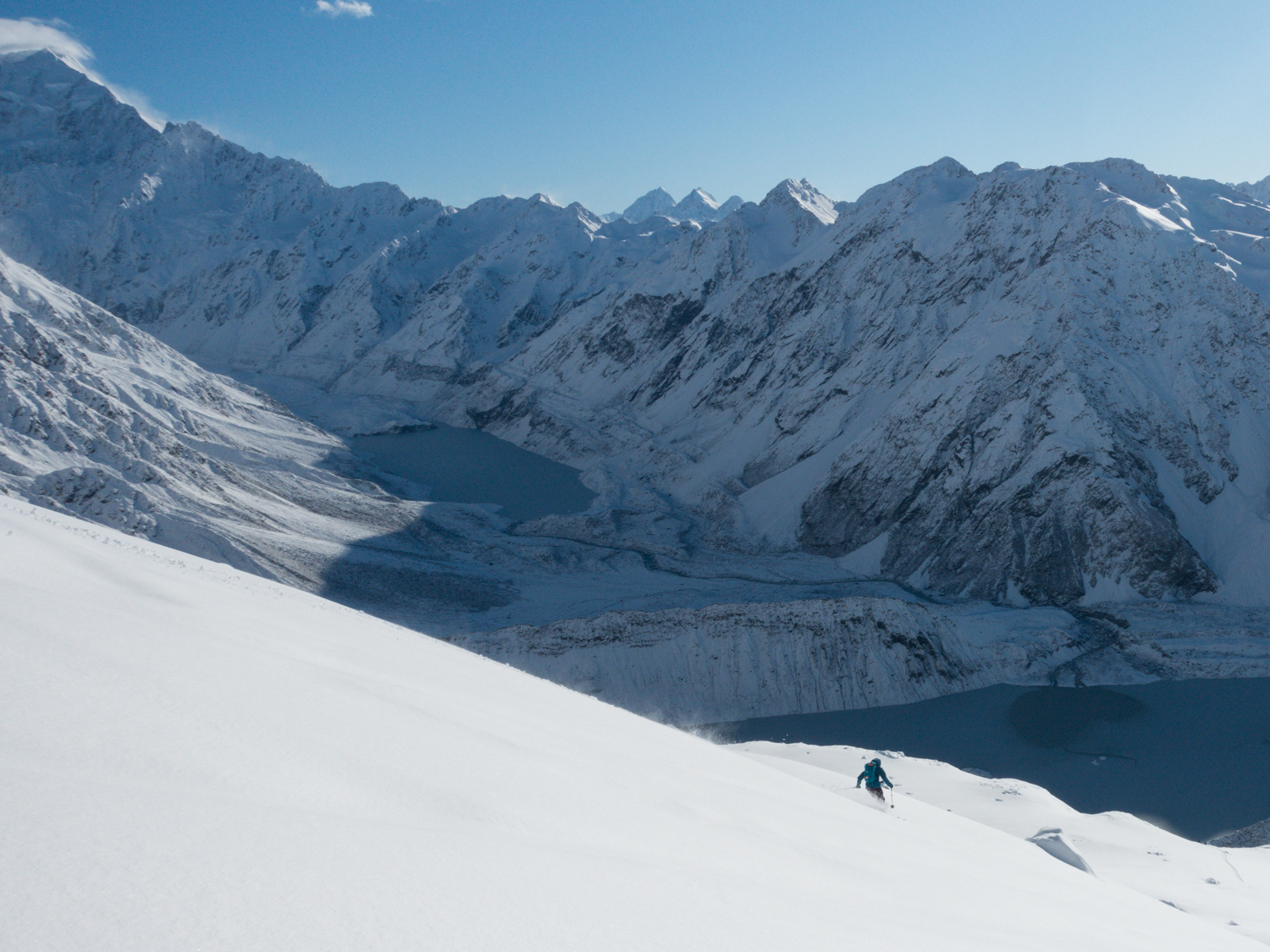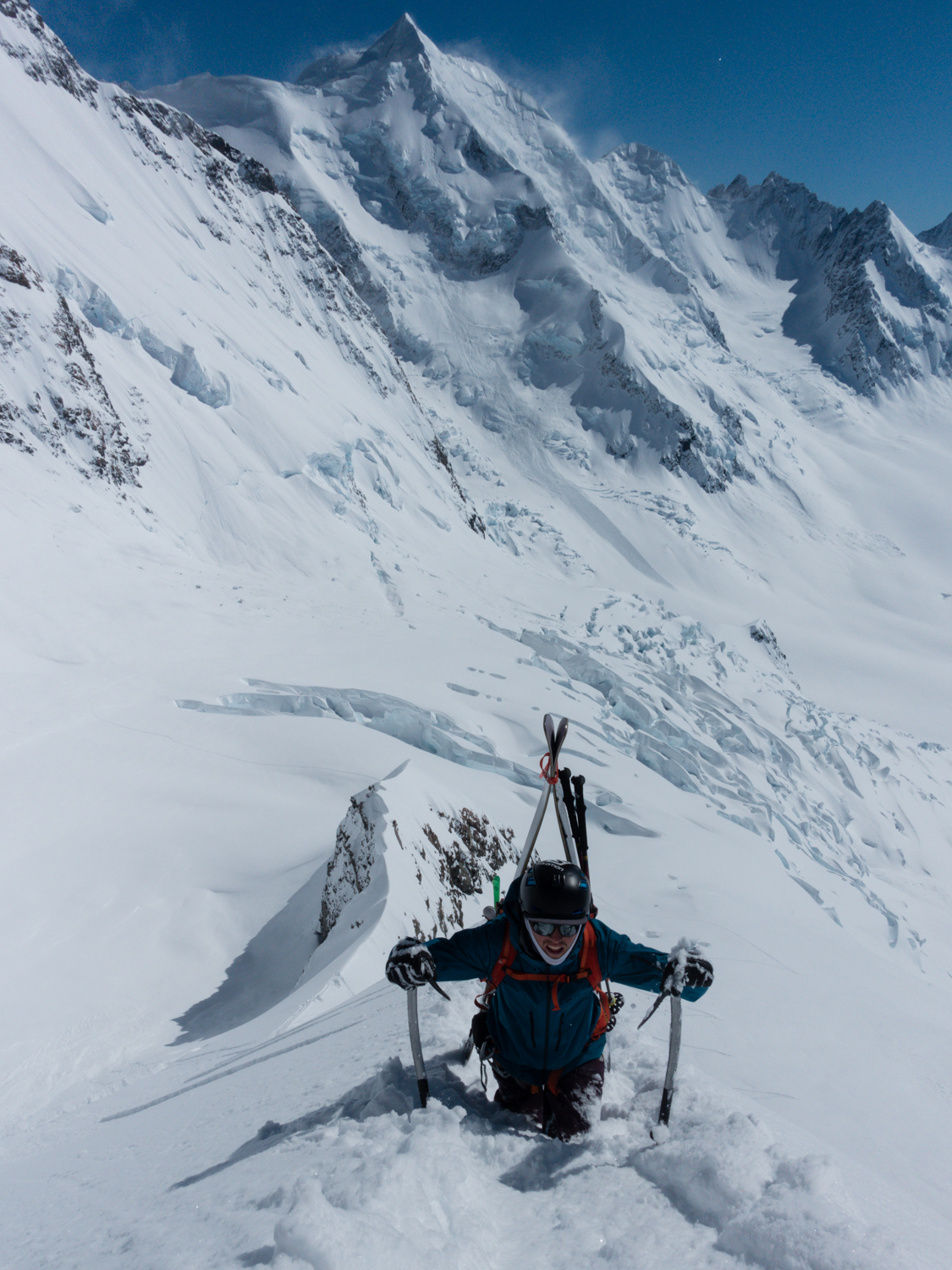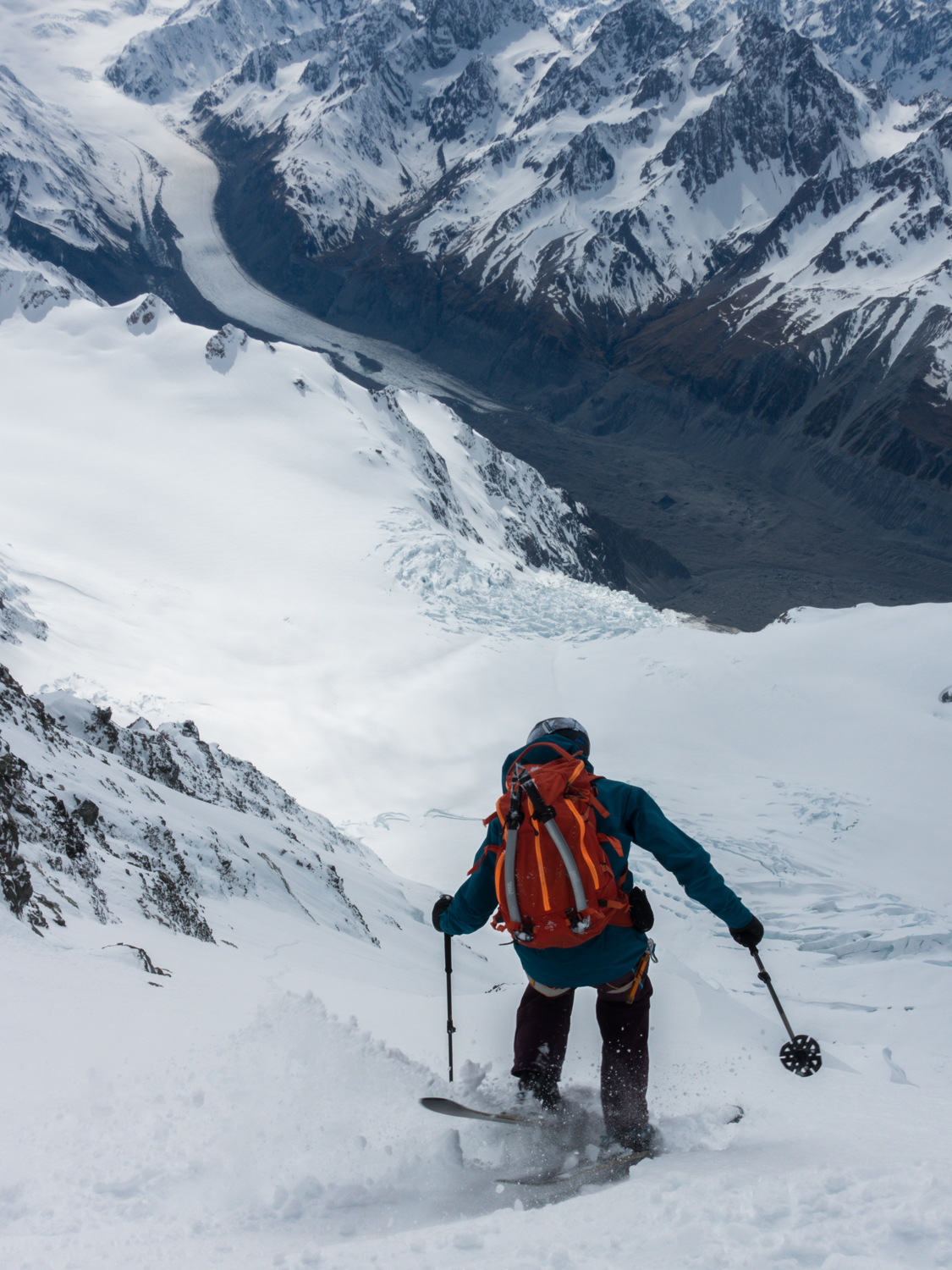
New Zealand 2024 Part III – Riding the Dragon’s Back

***The Jones Route***
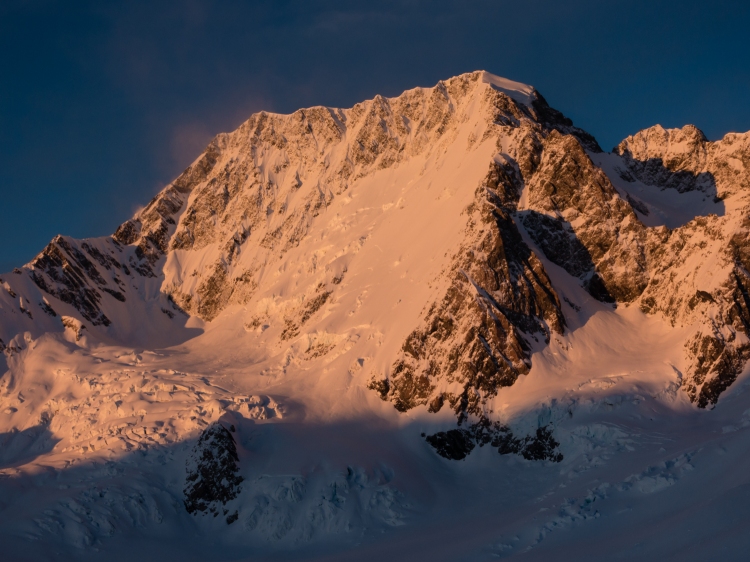
Aoraki / Mount Cook NZ by Ross Hewitt
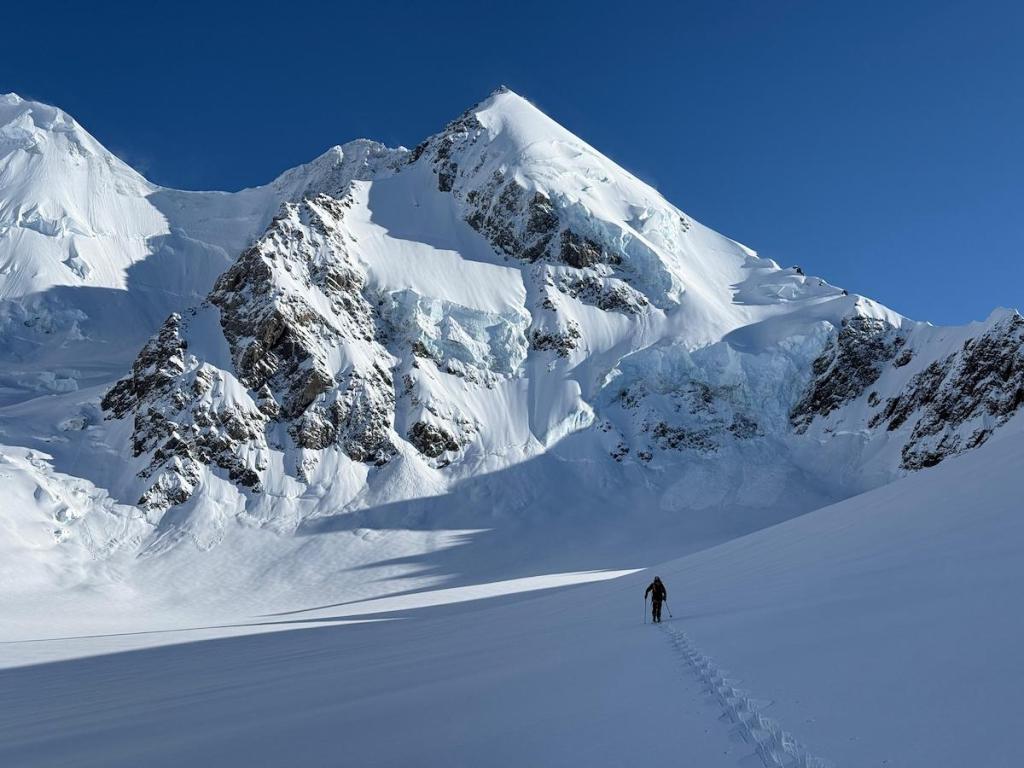
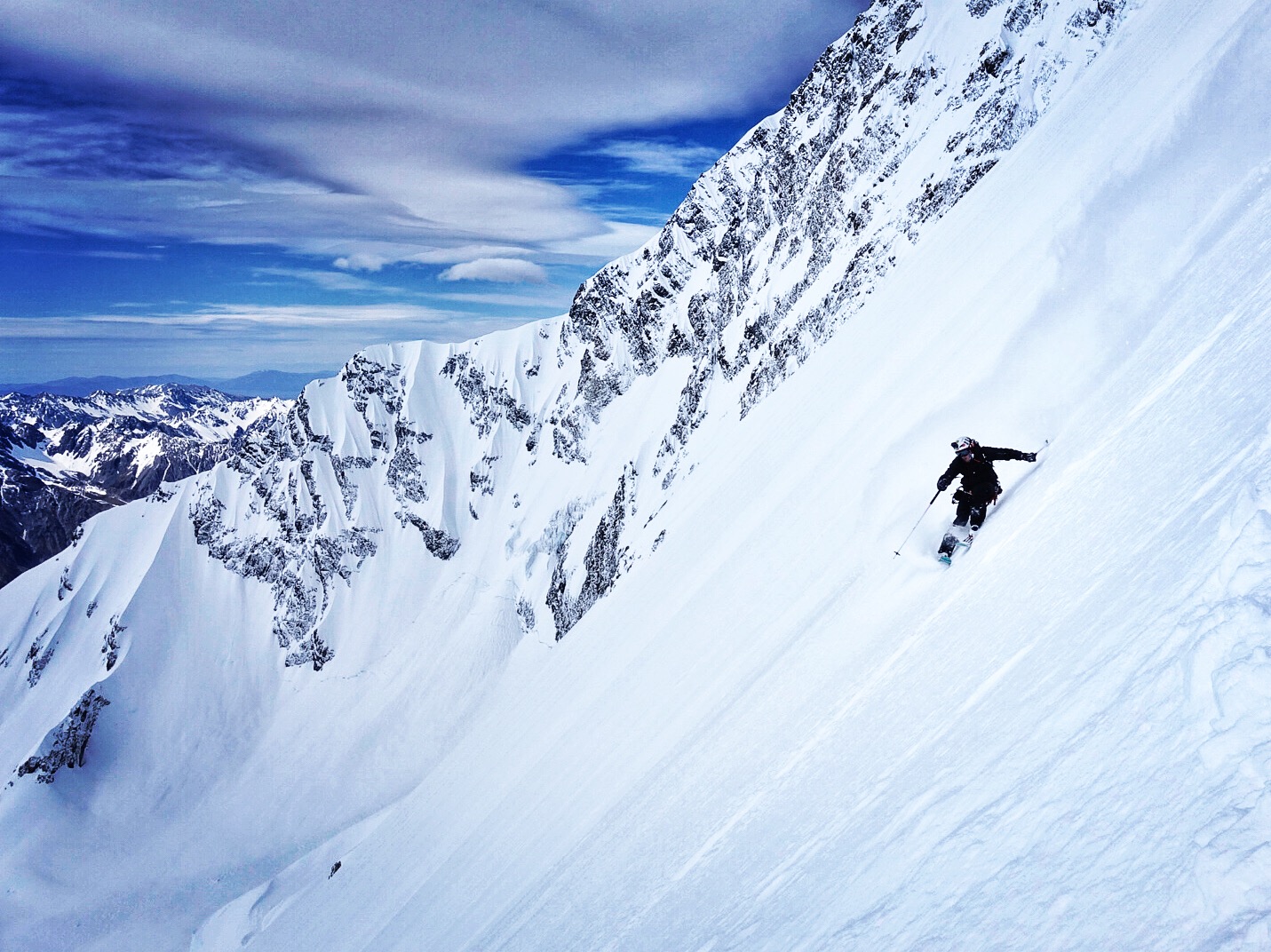
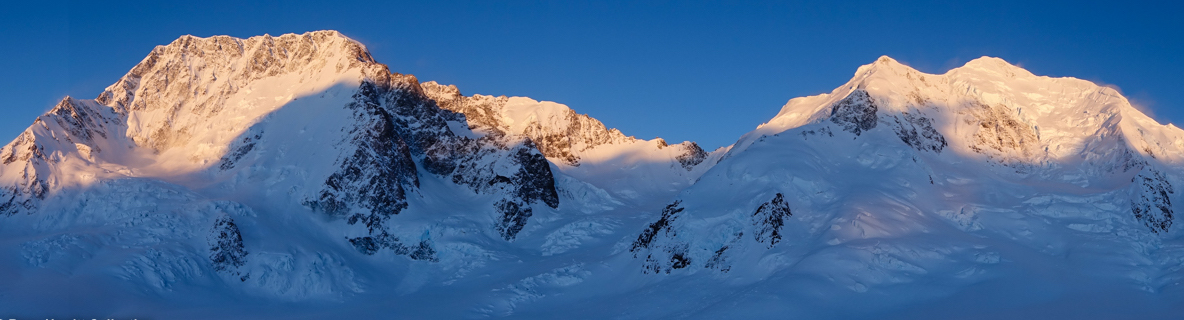
The Jones Route climbs the leftside of the seracs then takes the mid-height ramp left into the upper central couloir.

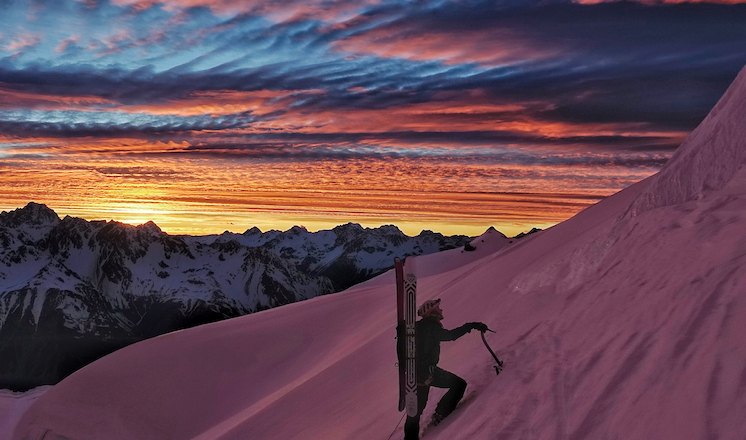
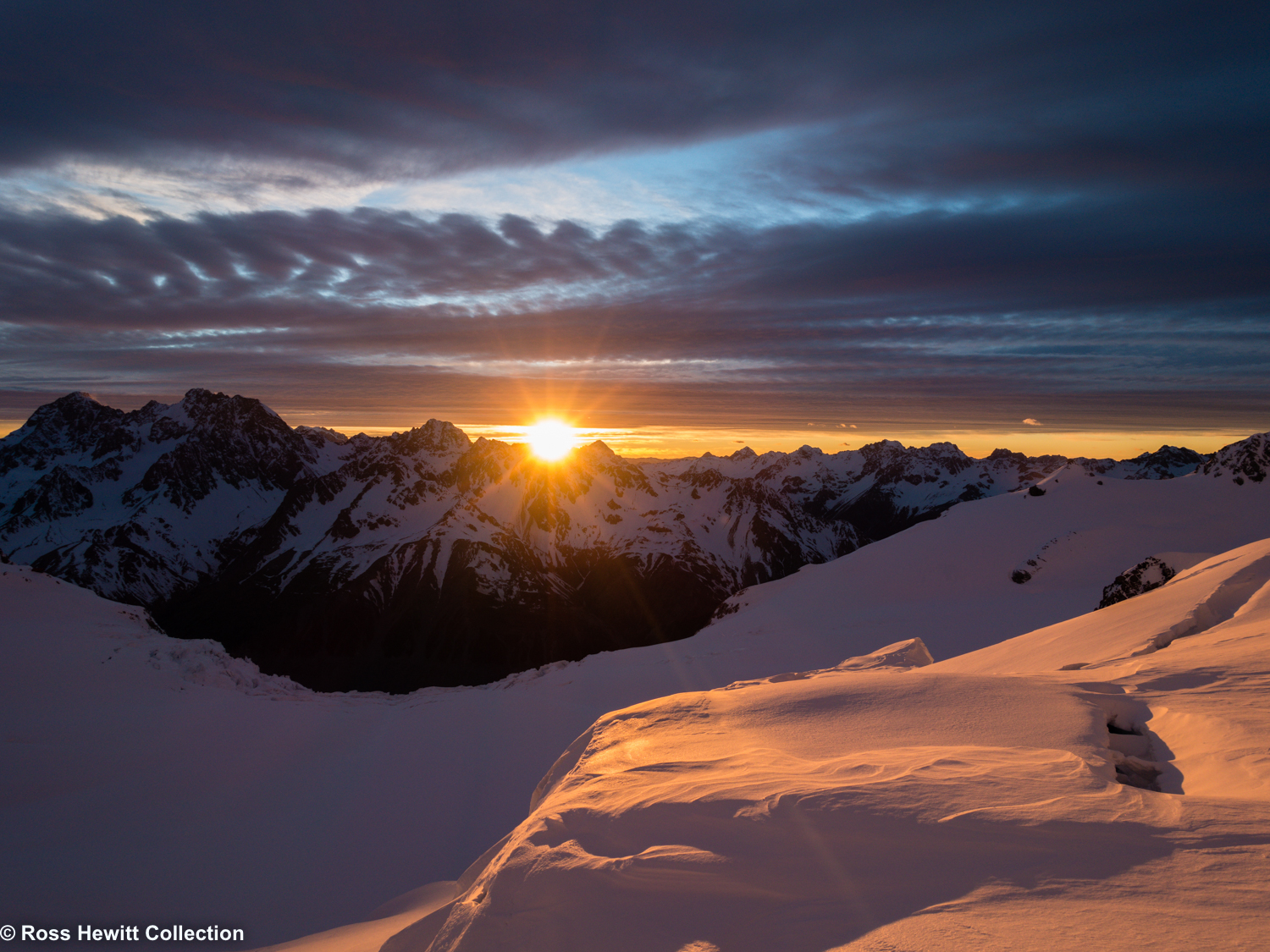
My alarm woke me from a deep slumber just after midnight, and I quietly eased out of bed, poking my head out the door. All was quiet, with no wind, but as I sat down to force some porridge into my stomach, that familiar howl of the Plateau hut announced the early arrival of the nor’wester. I still held some hope that Cook might provide enough shelter for us to succeed and if you don’t go you won’t know. As we headed out the door Mathurin bade us fairwell and dropped the bomb with a youthfall meaningwell chuckle – ‘it’s 1 year since Tof tragically lost his life in Chile, don’t die today’. Guillaume and myself briefly locked eyes before going out the door, both of us clearly feeling the superstitious omen that had been placed in the front of our minds about the loss of our dear friend. Trying to put that behind us, we skied out the into the dark but as we crossed the Linda and felt gusts ramming against us, I could sense the wind eroding my hopes.

We skinned up onto the bench, maintaining distance from the seracs on the east face, and quickly identified the start of our route. For the moment, we were sheltered, and I led us into the shrund. As I stepped onto a fragile jammed block of snow, I was shocked to see it span a massive hole plunging into the depths of the glacier. I quickly shouted for Gee to keep the rope snug between us. To navigate the overhanging lip, I had to cut a ledge for my knee and chop away the snow above so that my ski tips wouldn’t catch as I delicately levitated upward. We quickly moved onto the spine, where the snow was decent, but any shelter we felt was merely a momentary pause in the weather. Soon, violent downdrafts had us gripping our tools and hugging the slope until the worst had past.

By the time we reached the top of the spine, the wind had worsened. We climbed up the steep ramp, which rose 600 meters up the face, only to find that the surface had been baked by the heat of the day before. With a deteriorating forecast and poor conditions, it was an easy decision to bail and leave it for a reset. We all had plenty of time of left in New Zealand for another attempt. Later back at the hut Gee and myself admitted how Mathurin’s comment about Tof had eroded our resolve. As I write this month’s later, readily able to admit how scary the gusting wind was, trying to tear us off the mountain while we over gripped our axes, I can see maybe Tof was telling us that it wasn’t the day to push.

We rolled back into the hut to welcoming arms of our friends who had watched worrying as we had battled it out in the maelstrom. Soon after our heli arrived to transport us to hot showers, golden nectar, warm beds and the chance to process what for me, had been an insanely intense experience with the skiing on Silberhorn and Syme living up to my wildest imaginations of progressive big mountain freeriding.

On the other hand, there was a bitter pill to swallow as the twists of fate would prevented me skiing these plum lines on Aoraki Cook – an injury had forced me out of the first descent of the Caroline in 2017, in 2019 I didn’t have a partner, in 2024 the ice seracs on Caroline no longer look inviting breaking up the line, and now Jones would slip through my fingers.

***(The Dragon’s Back***
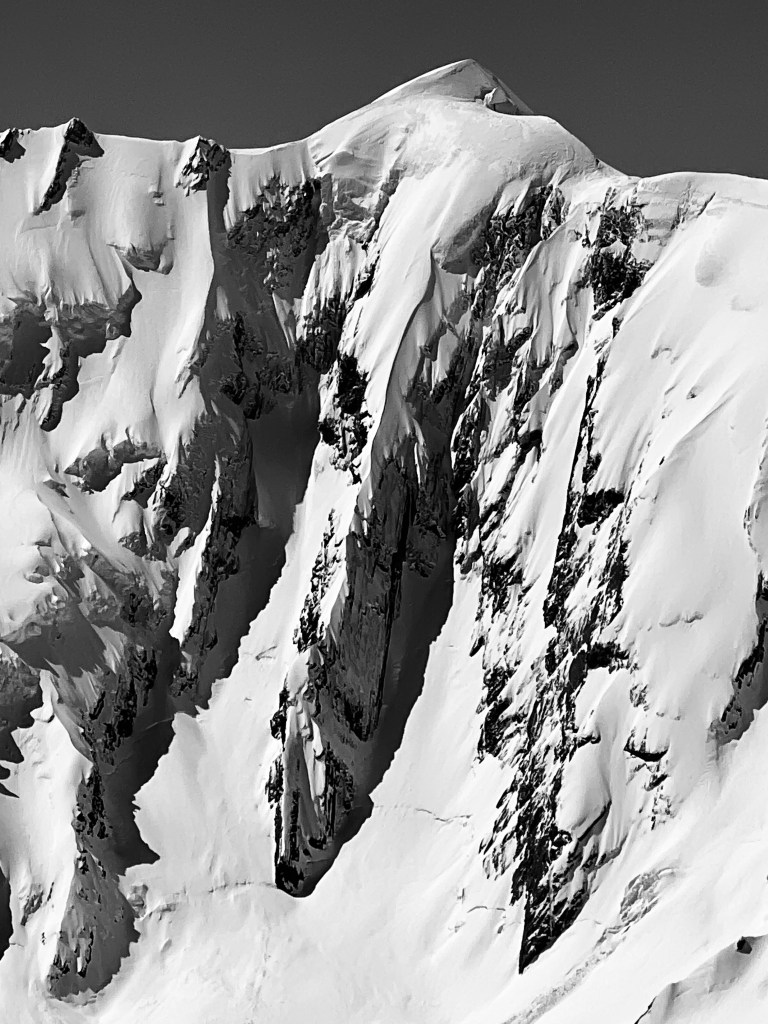
Elie de Beaumont’s Spencer Face and The Dragon’s Back Central Spine

Eight years previously, I embarked on a first descent of Elie de Beaumont down its majestic right flank. As I glided effortlessly over the snow, I felt an irresistible pull to the central spur looming above me. It struck me as a magnificent sleeping dragon, its features strikingly defined in the rugged landscape. The contours of its snout and the gentle curvature of its eyes were eerily clear against the backdrop of the mountain. As I continued my descent, the dragon revealed more of its form to me. The head and back emerged from the swirling snow, and soon, the haunches and wings unfolded like a grand tapestry along the slopes. This breathtaking sight ignited my imagination, urging me to contemplate the exhilarating possibility of skiing along the spine of this mythical creature’s back, tracing its contours with each turn on my skis.

Tom Grant on the 1st Descent of Ellie’s Right Flank in a Onsight Approach from Tasman Saddle Hut

As the years slipped away, time felt as though it was accelerating, a fleeting reminder of my own ageing process. In 2017 and 2018, I was deeply immersed in the rigorous training and demanding examinations required to become a guide. Our trip to New Zealand in 2019 was marred by unrelenting poor weather, and then the onset of 2020 arrived, marking the beginning of the COVID-19 pandemic, which effectively sidelined me. Shortly after, we embarked on the journey of starting a family. Amidst these life changes, I often stumbled upon a cherished photograph from our 2016 descent, featured in a published article. It ignited a spark of inspiration within me for further research on the elusive central spur. Yet, much to my dismay, I discovered that most images of this formidable face were taken from a distance of 10 to 15 kilometres. This made deciphering the enigmatic nature of two indistinct crux features particularly challenging, as they lay obscured in areas of poor resolution, too pixelated to draw any clear conclusions. The west side of Elie is a wonderfully remote and rugged landscape, adding complexity to any reconnaissance efforts. Its wild beauty may be alluring, but navigating this challenging terrain is far from easy, making every exploration a true adventure.

As we returned to the present day, we embarked on a breathtaking eight-hour drive from Mt. Cook Village, navigating the winding roads of Haast Pass. The journey took us along the rugged, largely uninhabited West Coast, leading us to the charming township of Fox Glacier. The landscape evolved dramatically, beginning with sprawling golden grasslands and picturesque braided river valleys, interspersed with vast, shimmering lakes. Gradually, these vistas transitioned into dense, impenetrable jungle, where the air was thick with the scent of lush vegetation. We encountered isolated, sandy beaches that met the deep blue waters of the Tasman Sea, a striking contrast to the vibrant greenery around us. Exotic birds flitted through the trees, and the sight of tumbling glaciers added a touch of majesty to the scene. It felt almost surreal, as if we were in a land where Vietnam’s tropical beauty harmoniously intersected with the grandeur of the Himalayas, inviting us to enjoy ice cream by the sea while gazing up at a giant green pigeon perched high in a palm tree.

Bruce Bay and the Tasman Sea
Trees growing in the direction away from the west wind

After a rough night at NZAC’s Porter Lodge in Fox, where the loud snoring of fellow occupants disrupted our sleep, we awoke to a breathtakingly cold and crisp morning along the coast. A thin layer of ice coated the windshield of our car, glinting in the early light. My aspirations of skiing down steep slopes 3,000 meters above were dampened, much like the biting temperatures that surrounded us. It would take a significant amount of warmth to melt the hard, crusty layer left from the previous week’s freeze-thaw cycle. The weather forecast promised the next two days would be cold yet clear with strong winds, while the third day was expected to be calm and pleasantly warm, perfect for our primary goal. West-facing slopes always pose a challenge, as they absorb the afternoon sun and require that same warmth to transform into enjoyable skiing conditions. With an understanding of the nuances of the terrain, we were eager to see how the conditions would evolve over the coming days.

After a quick and hearty breakfast of steaming oats and rich espresso, we set off for the airport, excitement bubbling within us. As the heli climbed it offering a breathtaking view over the stunning icefalls of Fox Glacier, shimmering in the morning light. Our eyes were glued to the window as the majestic Mt. Tasman came into view, its towering mass capturing our attention as we craned our necks to admire its splendor. Upon reaching the hut, we quickly claimed our bunks, stashing our gear in preparation for the adventures ahead. The bright sunshine and crisp mountain air invigorated us as we set out toward the Minarets, eager to seize the beautiful weather and reacquaint ourselves with skiing after a week away from the slopes. However, I have to admit, on that first day, I struggled. A string of restless nights spent in noisy and crowded mountaineering huts had left me feeling drained and dehydrated. During the climb, I paused and drank of half a litre of water, nearly gulping it down, and gradually started to feel more alive. Yet, fate had other plans for us. The snow gods conspired against our ambitions, as easterly winds sculpted tricky wind slabs on the headwall, ultimately forcing us to abandon our ascent. Disappointment washed over me to fail on such a moderate route. On the second day, I set my sights on skiing a small, steep spine, hoping it would help sharpen my focus for the challenges awaiting me. But the cold air had hardened the snow into an unforgiving surface, and once again, I found myself turning around before summiting. It was disheartening to squander two days of promising weather that could have allowed us to tackle much bigger objectives east of the divide. Even more frustrating was the realization that the challenging snow conditions were draining my confidence, leaving me uneasy about the task of conquering the Dragon’s Back on Elie the next day. As Day 3 dawned, it brought with it the promise of warmer temperatures, brilliant sunshine, and gentle breezes. With no alternative plans, we resolved to give it a shot.Our successful streak on Darwin, Dixon, Silberhorn, and Syme had reached its end with failures on Cook (Jone’s Route) and the Minarets, the question was what would fate have in store of us now?.

Views Across the Franz Joseph Catchment

I meticulously packed six energy bars and two litres of water, preparing for a full 24-hour day of adventure. I desperately needed vital sleep in our cramped hut, which was filled with the restless sounds of snuffling and grunting like wild boars, making quality sleep and elusive commodity. After a leisurely start we set out from the hut at 7 a.m., the air crisp, the frosted world around us sparkling in the first rays of sun. We glided over the smooth icy surface of the 4 km glacial plateau until we reached the breakover point of the Styx Glacier. The next section from the Styx onto the Times Glaciers would be a crux in itself where precious time and energy could easily be lost, which could cost us our shot at the Dragon’s Back.

We skied the spines down to the choke and then downclimbed refrozen snow until we could ski across the Styx glacier

A steady descent of 350 meters lead into the chilly shade on grippy frozen snow, we found ourselves approaching an area overlooked by the towering an active Styx seracs, their ice formations glistening like colossal sculptures. My chest tightened with the thought of being underneath them and we veered leftwards to distance ourselves as much as possible. As we approached the glacier, the final stretch narrowed, and the slope steepened dramatically to a challenging 50 degrees. The snow beneath our skis became bullet hard, forcing us to transition carefully and downclimb, each movement requiring focus and precision. Suddenly, the sun breached the horizon, flooding the landscape with golden light and quickly raising the temperature by what felt like 30 degrees. In that moment, it wasn’t possible to stop and delayer; the heat enveloped us, the sweat poured off us, depleting our water precious reserves for the day. It was hard not to feel devastated by this loss but there was nothing we could do about it except get on with it. With determination, we pushed on until we finally reached the shade on the glacier, where we could finally peel off our heavy layers and revel in the brisk, refreshing air.

Tip-toeing past the head of the sleeping dragon on our way to Walter-Elie col

After strapping back on our skis, we briskly traversed beneath the towering seracs of the Styx Glacier, the looming ice formations casting an unsettling shadow over us. As we manoeuvred through the scattered boulders left by a recent buttress collapse, a wave of relief washed over me when we finally emerged from the overhead threat, feeling the warmth of the sun on my face. On the lower Times Glacier, we quickly stashed some water and snacks, ensuring we had supplies for our return journey, before embarking on the daunting 1,400-meter ascent to Elie de Beaumont. Beginning our ascent to the Elie-Walter Col, we past under the the rugged headwall of Mt. Walter which slowly started shedding its storm coating of rime in the strong sun. Chunks of water ice began to break free, accelerating towards us like homing missiles. We remained vigilant, scanning the rocky outcrops above for any signs of danger. After successfully dodged several larger pieces, but suddenly, a rounded chunk veered towards me in a menacing arc. It struck my toe piece with a jarring impact, knocking my ski loose. In a split second, I dove to the side, my instincts kicking in to retrieve the runaway ski and avoid losing it entirely.
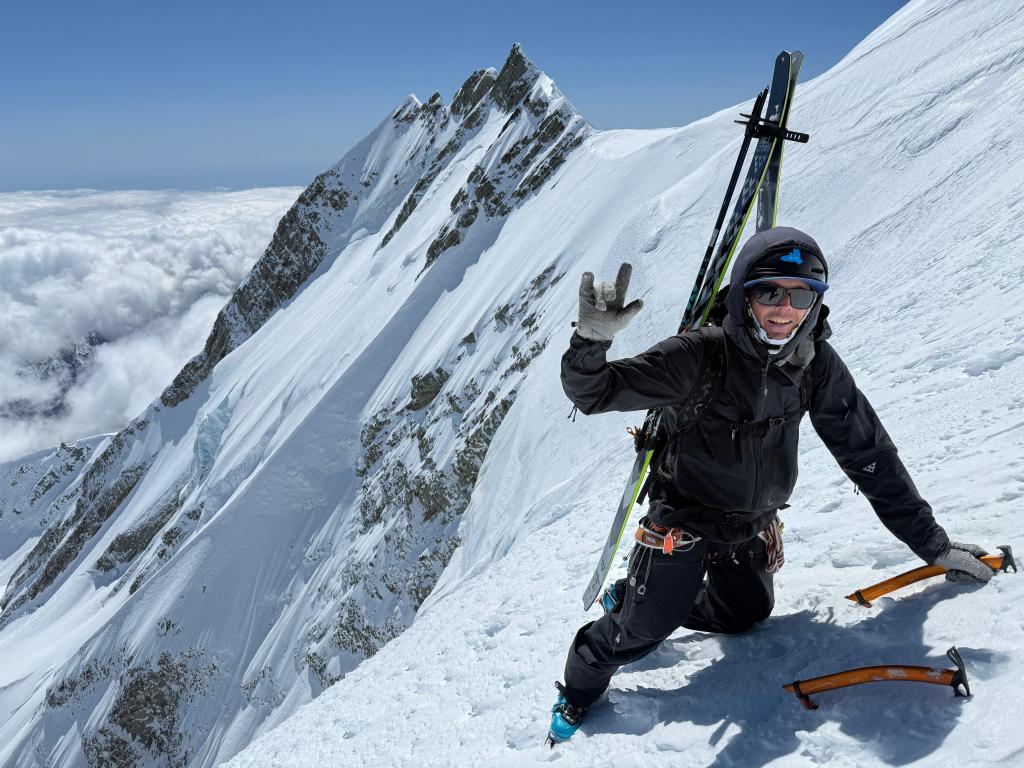
Ross Hewitt near the top of the line, Photo Beau Fredlund

We arrived at the windless Elie-Walter Col after six hours of effort. While we ate a snack, we took the time dry our feet in the warm sunlight in an attempt to stop the skin going soft and peeling off. Finally, it was time to climb the ridge of Elie, where we were rewarded with a view of the Dragon’s Back, beautifully illuminated by the afternoon light and covered in a fresh layer of snow. Below the summit, the terrain was riddled with treacherous rime, and we carefully downclimbed to the skiable snow. At times, our boots plunged deep through the icy crust into soft snow beneath, almost causing us to lose balance and topple off the mountain backwards. It was more than a relief to reach a consolidated snowpack.

Now, we found ourselves atop the Dragon’s Back, hoping to make amends. I gazed across a sea of clouds flooding the valley below us from the west. This sight gnawed at my mind, as it would seriously hinder our return passage through the complex terrain of the Styx glacier. I recalled standing at the same spot eight years ago, preparing to ski while clouds piled up against the bottom of Elie’s west face. Back then, after skiing along the right flank, we turned around and climbed back over the divide, escaping the cloud and returning to Tasman Saddle. This time, however, we would return to Centennial Hut. These were problems for later, so I pushed them aside, letting the music on my phone bring me back to the moment. I sought the calm and relaxed mental state necessary for optimal performance, all while managing the tension from our precarious position above the void and the usual pre-match nerves vying for my attention.

A glance at my watch revealed it was 4:45 PM. I had been waiting for 20 minutes after making some initial turns. My first turn had been good, with my skis punching through the crust to the unconsolidated winter snow beneath. On the second turn, my edges glanced off the crust, struggling to grip the icy surface. I shouted to Beau, “We need to wait until 5 PM for this to soften more,” and stomped out another platform to make myself more comfortable.

I looked down at the glacier and watched as the evening shadows reached upward toward us. Soon, the snow would refreeze, becoming crusty and difficult to ski. My mind raced, trying to estimate how long we had before the shadows crept up the face, which would complicate our descent. My impatience grew as the realisation set in that perfect snow to the bottom was unattainable. I felt the snow’s surface with my fingers; the icy crust was beginning to soften. It was game time.
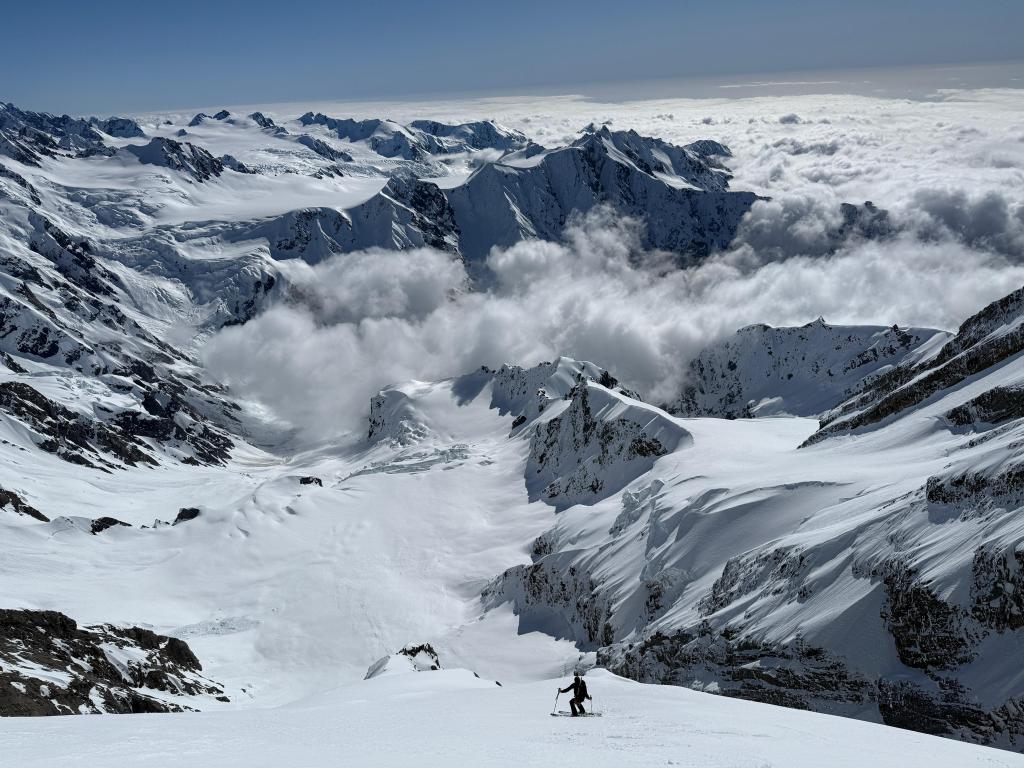
Ross Hewitt skiing the easy headwall on hard snow. The Times Glacier, Styx Glacier, West Coast Neves and Tasman Sea Lie Beyond. Photo Beau Fredlund

We skied quickly down the upper 45-degree shoulder onto the spine and onto the beginning of the difficulties. Beau joined me and skied through, revelling with the situation, surrounded by the tumbling blue seracs on our right and the gravitational pull of the void below. I knew he had been dreaming about this route for years; in fact, his laptop screensaver was a photo of Elie’s west face.

Beau Fredlund Approaching the Spine with the snow thank fully softening before it got steep and technical

The crest of the spine had hard snow that forced us onto the steeper right side. Fortunately, this had softened nicely in the sun. With heady exposure on all sides, we both felt tense and apprehensive about what lay below—how steep it would get and the uncertainty of the rock sections. Would we find any rock anchors, or would we have to improvise or even downclimb?

I took the lead, probing the snow ahead to test its edgability, making chop turns to avoid gaining speed and give my edges a chance to grip. I focused deeply, fully in the moment, losing all sense of time as we made magical, heady turns down the neck of the dragon.

Ross Hewitt contemplating the spine. Photo Beau Fredlund

The first crux was a rocky fault running diagonally across the face, with 2-3 meters of ice 30 centimetres wide linking to the lower 55-degree snowfield. Any thoughts of straight-lining were quickly replaced by the need to find an anchor. Beau tested a spike but soon realised it was the Jenga block, holding everything above. I created a bollard in the arête and backed it up by counterbalancing on the other side. This allowed Beau to downclimb securely, testing the quality of the ice for me to follow. I was relieved to find solid placements in the chewy well bonded ice.

Once back on skis, the next turns were perhaps the steepest of the route, especially given the off-camber nature of the spine. The snow was getting warm, making us nervous about triggering a wet pocket over the unconsolidated winter snow, but everything went smoothly, including navigating a second small rock choke. It was a wild, exposed place to ride.
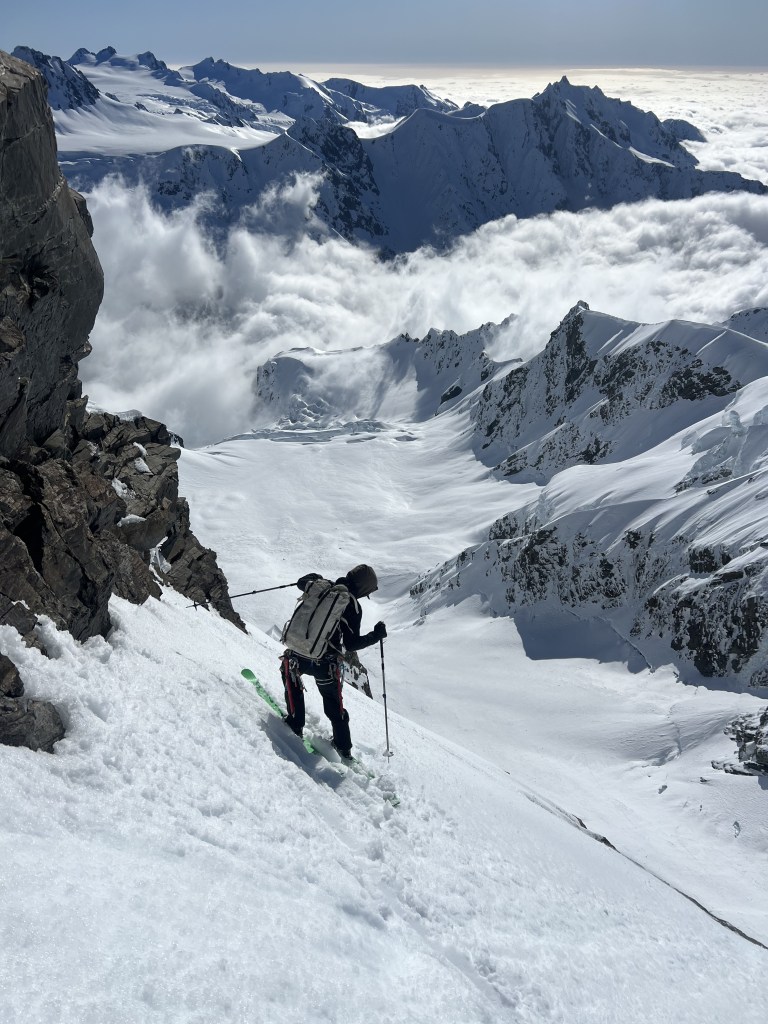
Maximum exposure in the central section with offcamber turns

A ramp on the right provided a straightforward exit to the glaciated bay and with the sun going down, we skied non-stop down the Times Glacier into thick fog. I snowploughed in front, keeping alert for crevasses while Beau followed behind using the GPS to locate our stashed food and water. We were 13 hours in at this point and still had 4 hours of uphill to go. I drank half of my water, exercising restraint to avoid gulping it all down. Despite my thirst, I couldn’t eat my sandwich and made do with the cheese and sausage filling while contemplating the tricky task of navigating the return journey in the fog under the Styx seracs.

Suddenly, the cloud parted along our route. “Now’s our chance, let’s go,” I said. Beau packed up frantically, and we skied over the snow and rock avalanche debris, skinning at a furious pace past the threat of the Styx seracs, sweating precious fluids we couldn’t afford to lose. Just as night fell, we returned to the safe ground of our approach, able to relax as the objective danger faded. Ahead remained a few hours of tough uphill wading up a combination of deep mush and occasionally teetering on the eggshell crust before cruelly punching through just as you committed it. Energy-sapping and soul-destroying. We inched forward, taking turns, hoping to gain some rhythm, looking forward to it being over. These next hours would be without food or water and we were sweating a lot as we battled to make progress with the poor snow.
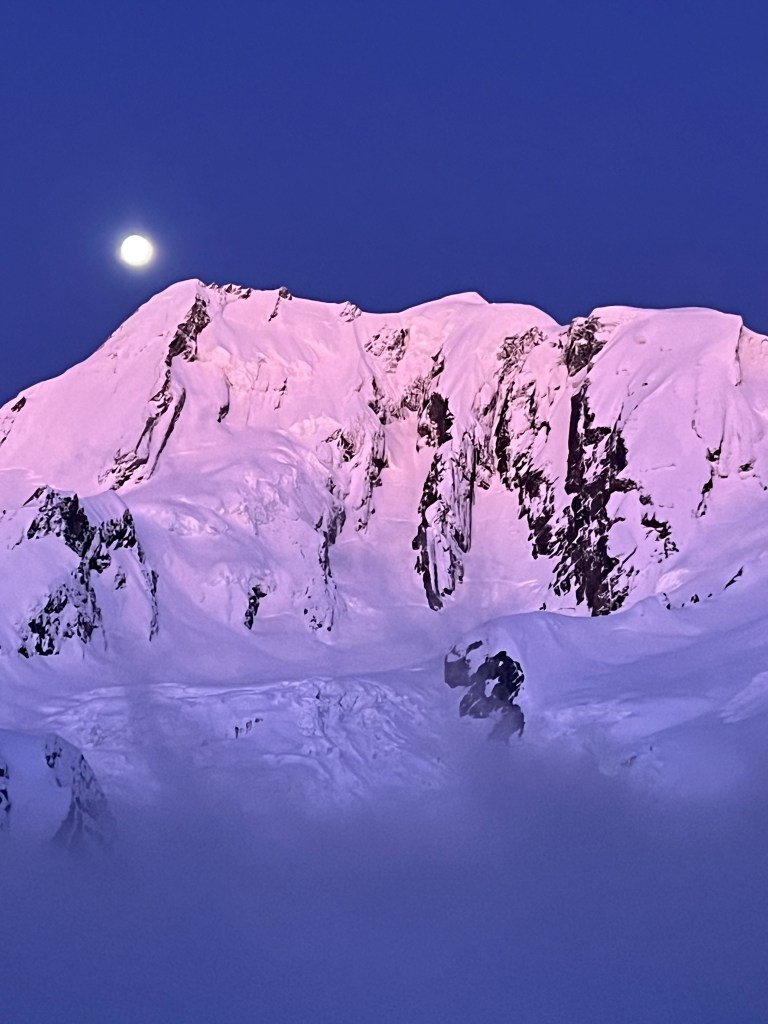
Alpenglow on Elie de Beaumont

Glancing over my shoulder, Elie was bathed in afterglow like a crimson tide of dragon’s blood. We paused in awe, very happy for the mental distraction from our latest battle. Mother Nature continued to put on a show as the full moon rose behind Elie, illuminating the landscape and removing the difficult task of navigating home from our weary minds. The Milky Way appeared particularly vibrant directly overhead in the Southern Ocean skies free from light pollution that we are familiar with in the Northern Hemisphere. For the first time, I saw Starlink, emitting pulses of green light as it orbited planet Earth. We ground on reaching the hut at midnight to join the other occupants already snuffled in the safe warmth of their sleeping bags.

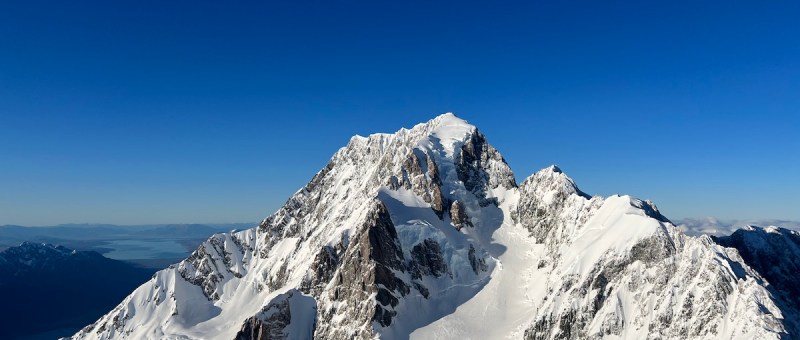
Exhausting climbing out back to Centennial up crust covered isothermal snow. Photo Beau Fredlund

New Zealand 2024 Part I, Darwin and Silberhorn

Our trip to New Zealand was adventurous, challenging, occasionally frustrating, but utterly awesome with all those magic emotional ingredients that, at first glance, don’t go together but, in the end, produce a wonderful outcome. After 6 weeks, Beau Fredlund and I had accumulated so much fantastic imagery that limited column inches in a magazine wouldn’t do it justice, and my blog offered me the freedom to express my thoughts and feelings and showcase the media we captured. This is part I of a series that I hope you will enjoy. Read time is 15-20 minutes.

The plane landed in Christchurch just after midnight. I was sleep-deprived after a 40-hour journey from Europe, much of which was spent next to an unhappy baby. As I picked up my ski bag from the carousel, a local police officer struck up a conversation and informed me that a guide had just died in an avalanche accident in the Arrowsmiths, along with other recent incidents. Disoriented from 11 hours of jet lag, I found it hard to process this information. With a few hours to wait for Beau to arrive, I desperately needed to lie down and rest but sleep proved elusive, and by 5 a.m., I gave up trying and went outside to stretch my legs. A quick check of the weather revealed a 4-day window starting the next day, which was good news. I knew we would be flying into the Mt. Cook Range in the morning, but before that could happen, I needed to pick up the rental car, collect Beau, shop for gas and ten days’ worth of supplies, and then drive 5 hours to Mt. Cook Village. The combination of jet lag and sleep deprivation was wreaking havoc on my ability to think clearly. The rental company had me jumping through hoops trying to get the start and expiry dates on my driving license translated numerically. Despite paying 70 dollars, the translated document still showed 5/10/30 as 5/10/30. I couldn’t help but smile, knowing that the French have similar revenue-generating laws.

Beau greeted me with a hug at the airport as it had been a few years since we had seen each other over a beer in Chamonix. Miraculously all his gear had made it and we hit the road in an unfamiliar hire car, fighting jet-lag, driving on the opposite side of the road. After what felt like an eternity, we reached Twizel, fortunately with only a couple of minor traffic violations along the way. We set about gathering provisions and gas and bumped into Cam Mulvey, who guards the Wyn Irwyn hut. The last part of the drive the road felt familiar and I could relax a bit, following the edge of Lake Pukaki through heavy rain to Mt. Cook Village. I had been on the go for 60 hours with little sleep, and after sharing a couple of social beers, collapsed into a deep sleep. However, jet lag pulled me out of slumber at 3 a.m. As I got up to use the restroom, I was captivated by the stars twinkling in the clear night sky, knowing we would be heading out in the morning. After a brief period of tossing and turning, I fell back into a deep sleep, only to be woken by Beau at 8 a.m. It was time to go.

**Darwin North Face**

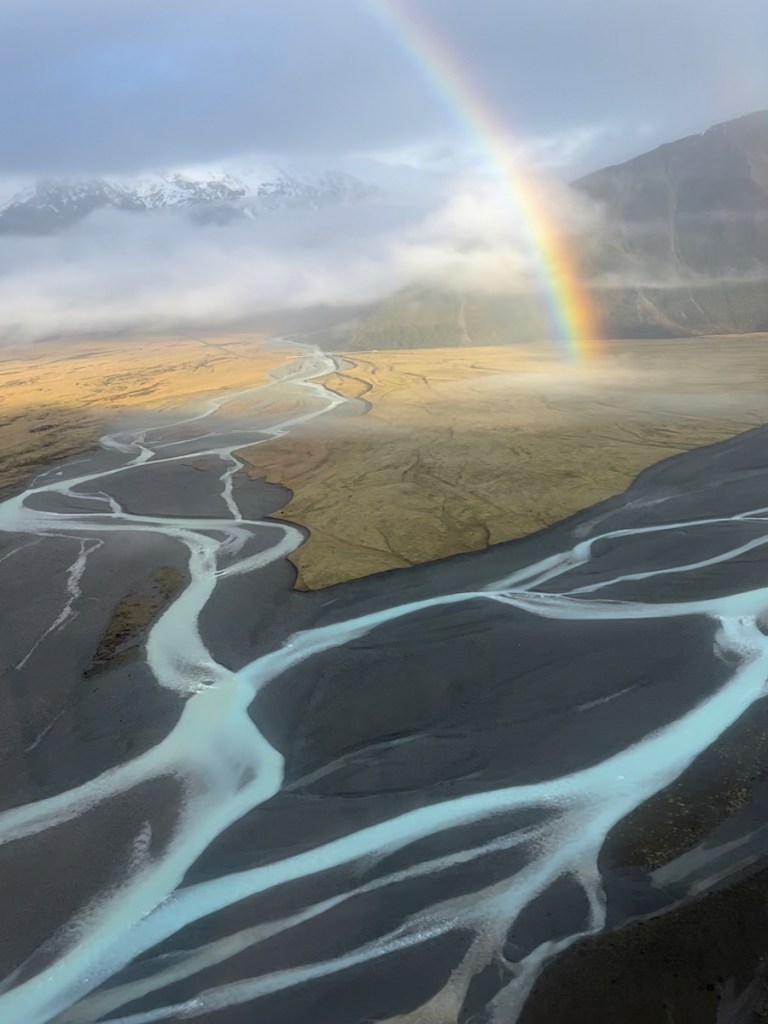
Rainbow over the braided river bed of Tasman

As we flew over the majestic Tasman Glacier, our eyes widened in disbelief at the sight of unprecedented avalanche activity unfolding on the shadier slopes around the 2000-meter mark. The landscape was ravished by slides, with even moderate-angled slopes scarred hundreds of meters wide. It was a startling, foreboding spectacle that left us contemplating the intricate layers and hidden dangers lurking in the snowpack.

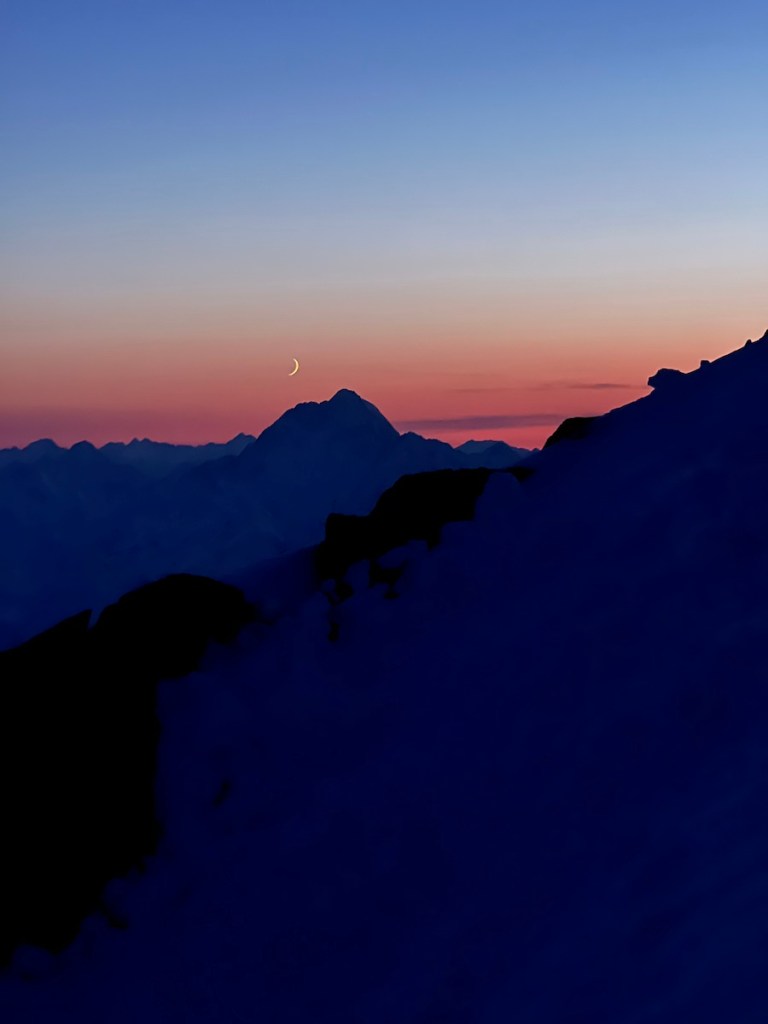
Moonrise over d”Archiac

On our first day, we opted to explore the serene beauty of the low-angled Bonnie Glacier, nestled beneath the towering peaks of Hamilton and Malte Brun. We skinned between sunshine and shadow, enjoying the cool of the morning and then the hot powder on the descent, relishing every moment spent outdoors as our circadian rhythm began to adjust to the significant 11-hour time difference.

Our reconnaissance mission was fruitful; from the head of the Bonnie, we gazed at the awe-inspiring Aoraki / Mt Cook, which stood resolutely free from any signs of avalanche activity. This observation provided reassurance that the avalanche risks were primarily confined to the lower elevations, and revealed that the sun-drenched North Faces lacked the same precarious weak layer.

Fuelled by our newfound insights, we set our sights on Darwin’s North Face—an elegant, 800-meter steep couloir that gracefully opened into a vast snowfield, leading up to the summit ridge. The allure of this remarkable line was irresistible, serving as the perfect warm-up for us to rediscover our skiing abilities after an entire summer spent guiding alpine adventures in the Northern Hemisphere.

Beau in the Couloir on Darwin North Face
We skied the right couloir

**Silberhorn East Face**

Silberhorn, Tasman, Syme

While Aoraki / Mt Cook may tower slightly higher, the intrepid Kiwi alpinist Bill Denz always deemed Mount Tasman the quintessential mountaineer’s mountain. Like a colossal Himalayan yeti, Tasman ascends an impressive 1,300 meters above Plateau Hut, its summit shrouded in a dense blanket of snow and ice that periodically breaks away, cascading down its formidable faces. The mountain stands before you, fiercely imposing, as if engaged in a powerful Maori ha-ka, challenging climbers with its intimidating presence. Its shoulders and arms —Silberhorn and Syme— taunt climbers to attempt the rime-coated ridges that lead to the lofty summit. Each route offers its own unique beauty and character.

Silberhorn’s winding South East Ridge is a captivating path, marked by a rock band that has grown over the years, a testament to the retreat of ice in our lifetime. For those seeking a sublime ski, it is the elusive East Face that calls out seductively, enticing skiers with its steep, pristine snowfields, interconnected by narrow couloirs that plunge directly from the summit. To unveil the hidden elegance of Silberhorn, one must ascend of either Dixon or Syme to secure a striking viewpoint.

In contrast, Syme presents a different challenge, where skiers must navigate a narrow couloir through the lowest rock band before making a rightward traverse onto the first spine. This spine forms the edge of the stunning 50-degree diamond face, a true gem set into the mountain, inviting skiers to its thrilling embrace. Here, one can easily envision the exhilarating experience of skiing, with sluff trailing eagerly behind. This captivating face, positioned diagonally across the fall line and subtly tilted to the left, feels crafted specifically for skiers carving turns to the right, as gravity gracefully pulls the sluff off toward the left.As you ascend above the diamond face, a narrow, winding ridge transforms, gradually broadening as the angle relaxes, leading to a serene small plateau. However, this landscape gives way to the forbidding sight of the unskiable, rime-crusted North Ridge, reminding all who gaze upon it of the mountain’s formidable power and beauty.

Five years ago, I arrived at Plateau Hut to encounter a winter wonderland, titty deep new snow, with a surface layer of cold sparkling powder that would ski like silk. The magnificent peak of Tasman loomed in front of me, the elegant snow ridges adorned with fondant icing whipped into miraculous features by the wind and adorned with powder spines. At that time, information about skiing Syme was scarce, it lay in mystery waiting to be unraveled. The first descent was made in the 1990s by the formidable French duo Pierre Andre Rhem and Jerome Ruby, whose adventurous spirits carved their names into history. The first known repeat of this formidable mountain happened in 2022, during the isolation of the COVID years, led by the talented Kiwi adventurers Sam Smoothy and Will Rowntree.

Every time I thought about Tasman and the Syme my heart rate quickened and my pains got sweaty, the idea of riding Syme captivated my thoughts. As I gazed upon Syme, it ignited my imagination, and I found myself lost in thoughts of how to ride each intricate section of its terrain. However, we recognised that the immense snowfall from the preceding storm would require a day to settle before we could mount an attempt and with more than a tinge of sadness, we redirected our plans toward a new line down the Caroline Face from Cook’s East Ridge.

Ross Hewitt after skiing a new line on the Caroline Face of Aoraki / Mount Cook NZ by Dave Searle
The author after skiing Sweet Caroline, 2019

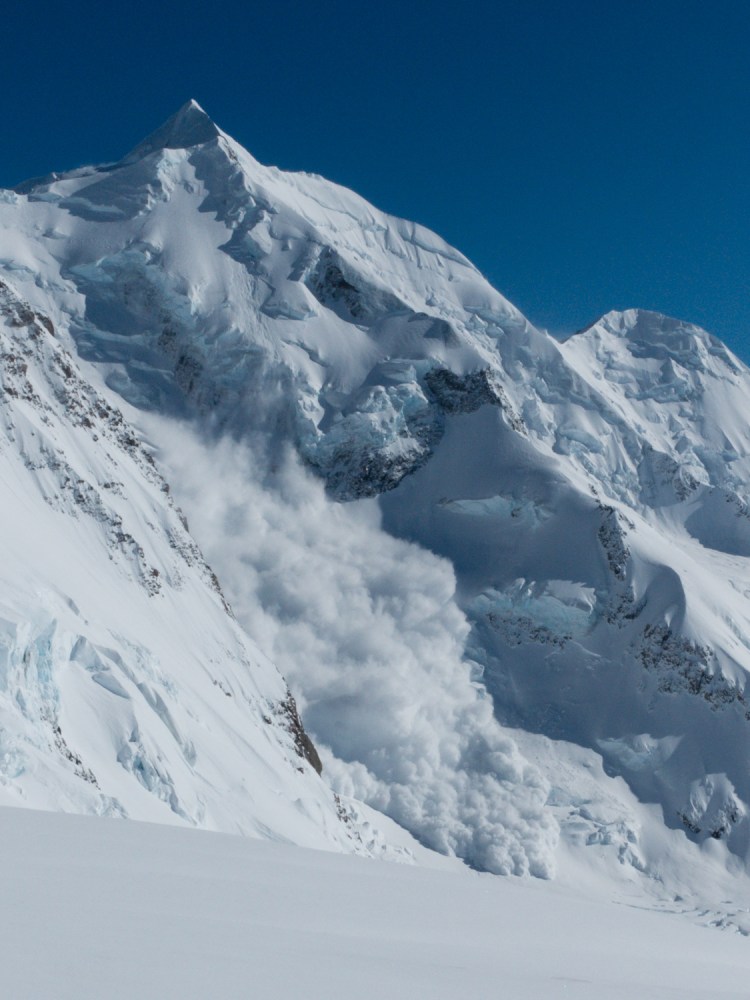
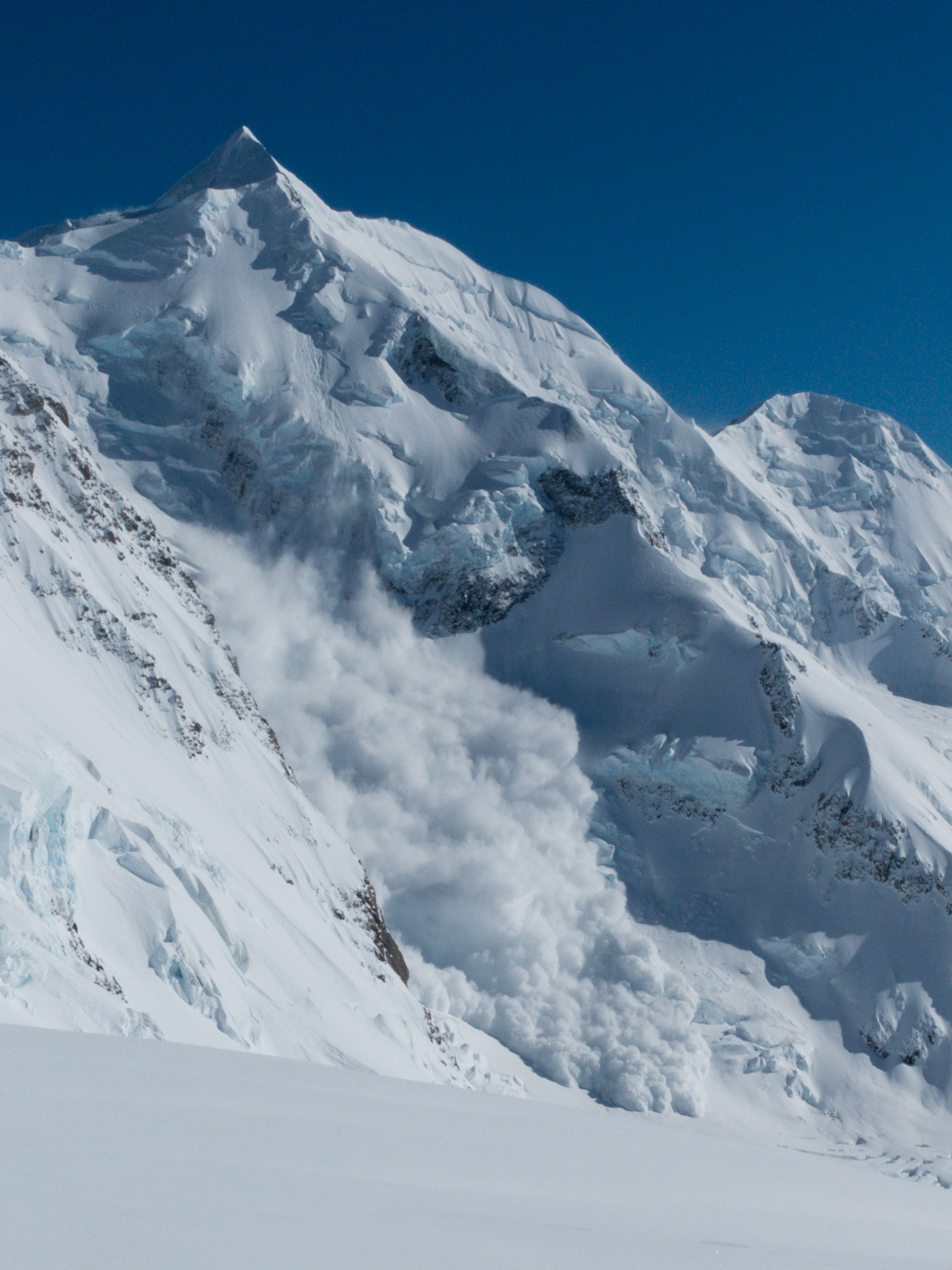
The next day we had only just left the hut before drama unfolded: a serac on Silberhorn gave way, unleashing an explosive avalanche that charged across the plateau, crossing the track we had followed. It was a stark reminder of the mountain’s power — if we ever needed convincing to steer clear of the larger faces, this was it. For the remainder of the trip, the wind howled around the hut relentlessly, eroding inclination to attempt the daunting challenge of Syme, its allure slowly fading under the weight of nature’s fury.

avalanche on Silberhorn, Aoraki Mt Cook range
Avalanche on Silberhorn

Fast forward to the present, and I found myself once again at Plateau Hut, this time accompanied by Yellowstone guide and New Zealand ski veteran, Beau Fredlund. The atmosphere was brimming with excitement as we were joined by the my good mate Will Rowntree and his trusted partner Sam Smoothy, along with another team comprised of Christina Lustenberger, Guillaume Perell, and Mathurin Vauthier. The air was buzzing with anticipation; we were eager to seize the fleeting weather window that lay before us and set out for Dixon. We made quick work of the climb, our hearts pumping with adrenaline as looming clouds threatened to blanket Marcel Col. Just before reaching the summit, an eerie shroud of mist descended upon us, transforming the world into a monochrome landscape where visibility shrank to mere retracing our ascent route by carefully following our boot pack, intimately aware of the precarious nature of our surroundings. This was my fifth attempt at summitting Dixon, each time failing due to summit slopes consumed in cloud.

En route to Dixon by Beau Fredlund
The author on Dixon by Beau Fredlund

Once we returned to the welcoming warmth of the hut, I took to the kitchen, whipping up a couple of hearty bacon and egg sandwiches to restore the energy I had expended racing up Dixon. With the scent of food enveloping me, I quickly fell into a deep, replenishing sleep. As the evening unfolded, the glow of the setting sun filtered through the windows, and we gathered to discuss our plans for the next day. Our visions diverged; Beau had his sights set on Syme, while I leaned towards Silberhorn, drawn by its easier accessibility and the ominous forecast predicting a similar cloud build-up. Eventually, after Will shared his stunning photographs from Silberhorn, Beau was convinced it presented a worthy objective. From my cozy bunk, my gaze shifted from the Cook’s East Face to Silberhorn and I memorised some key features and took a compass bearing of our approach route before setting the alarm for 2 am and dozing off.

Silberhorn’s Sick East Face

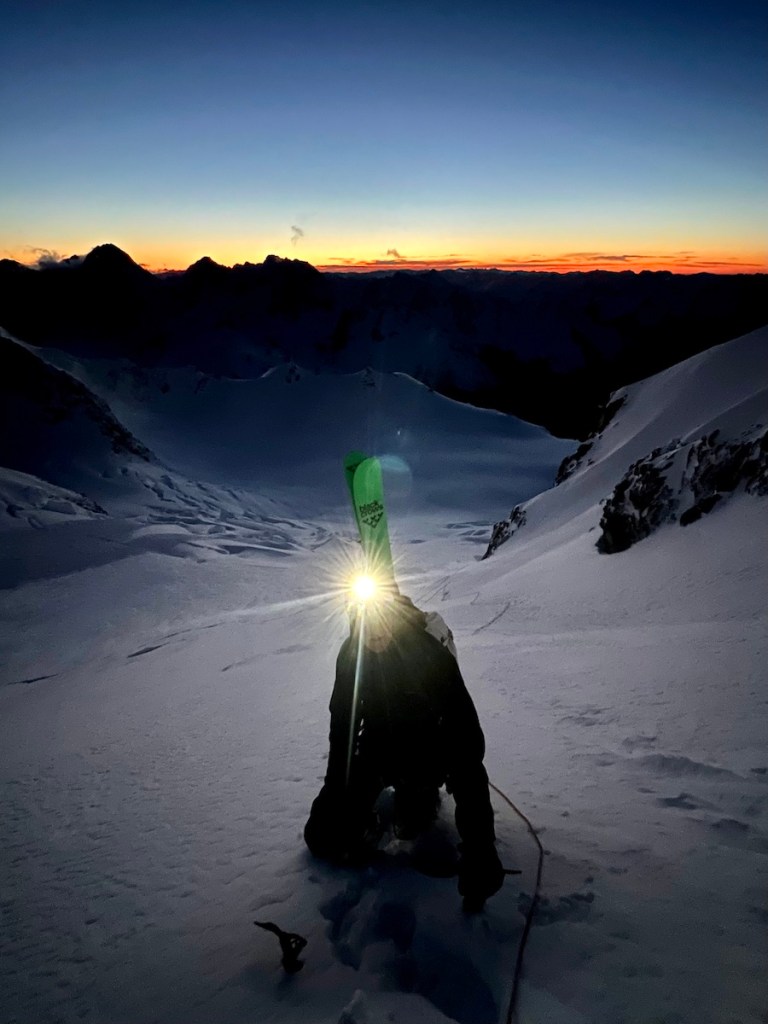
After a short night, we found ourselves stepping out of the hut and into the inky blackness of the night. The humid air crystallized into delicate diamond dust, sparkling like stars as it caught and dispersed the lights of our headlamps, creating an otherworldly atmosphere. Familiar landmarks transformed into ghostly shadows, and not even the outline of the mountain was visible against the night sky. Surrounded by darkness, I pulled out my compass, navigating by dead reckoning relative to a star’s position. As we entered a crevasse field we began to meander, forced to rely on GPS for guidance. This slower enforced pace allowed the piercing katabatic wind, which felt like icy fingers, to creep through my layers. Soon, I donned all my clothing and cranked my electric socks, desperately fending off the cold.

Above a ramp led to a rightward traverse we had seen from the hut. Suddenly, an unsettling pang of anxiety hit me; the slope felt more exposed than the gentle ramp we had anticipated with crevasses lurking below and some soft slab formation. I reassured myself that the limited range of my headlamp was skewing my perception, and I continued onward, knowing the next plateau lay just beyond my sight. After passing this treacherous stretch, a wave of relief washed over me, and I called back to Beau to follow my path while quickly reorienting myself on the map. Just then, the light from my headlamp flickered, signalling a low battery, victim of the unforgiving cold. With dawn still an hour and a half away, Beau graciously took over trail-breaking, allowing me to tuck in behind him, managing to conserve the remaining battery life. Soon, we reached the beginning of the “Mad Mile,” a daunting stretch of glacier that forms the approach to Syme Ridge. It’s dubbed “Mad” due to the colossal, threatening seracs on Tasman that compel most climbers to adopt an adrenaline-induced jog to pass underneath.

We continued hugging the left side of the bay, using the terrain above for protection and avoid drifting into the treacherous right side in the inky darkness. As we skinned across a large crevasse, the slope steepened markedly, posing challenges for our climbing skins. In the soft, pre-dawn gloom, we could barely discern two snow slopes above, each potentially our line. Neither of us had anticipated such difficulty in determining the start of the route. A wrong decision at this juncture could cost us precious calories and, more critically, valuable time—an increasingly urgent concern with clouds threatening to roll in by mid-morning. A swift glance at my phone revealed the dawn was nearly upon us, prompting us to transition to crampons and our magic carpet snow plates while we waited for enough light to reveal the correct path.

Beau at dawn on Simberhorn

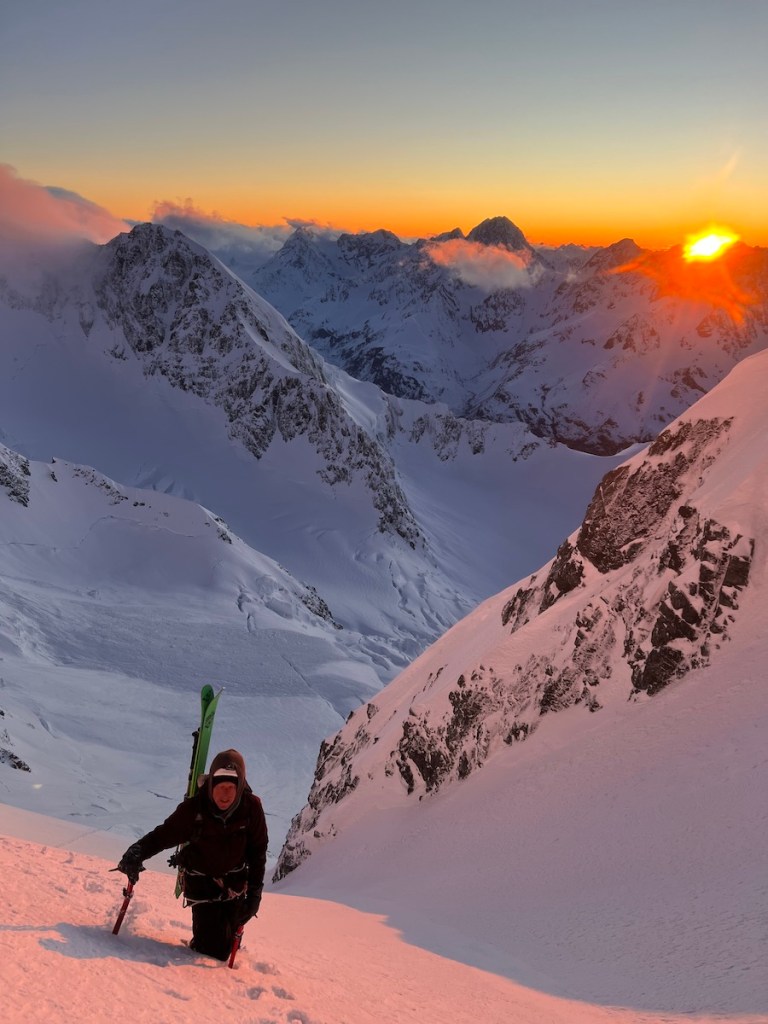
Now it was my turn to break trail, and in the grey half-light, I made good progress through the boot-deep powder. The horizon was ablaze with vibrant shades of red, a fleeting transition that bled into a soft blue sky that deepened with altitude, hinting at the marvel yet to come. As we approached the imposing serac, the sun finally broke free from the horizon, casting a warm, pink glow across the mountainside in a breathtaking display of alpenglow. We found ourselves momentarily frozen in awe, captivated by this extraordinary scene. In that moment, we pulled out our cameras, determined not to let its beauty slip away into memory. Those first rays of sunlight were a comforting embrace, offering a relief to our frosted extremities that had been suffered the biting cold in silence until now.

Sunrise hits Beau
The author reveling in the alpenglow
Special moments
Beau bathed in gold

I arrived at the ridge just below the summit and gazed into the Linda cirque. Aoraki loomed above me, its peak rising majestically to pierce the sky, bathed in a warm, golden light that transformed the snow into regal cloak. The last metres consisted of wind-polished blue ice, in stark contrast with the soft, powdery snow we had climbed so far. After a thoughtful discussion, we decided to seize the moment and ski while the light and snow conditions were optimal, rather than risk getting caught in the clouds again climbing to the summit with a deteriorating forecast. We were here to shred subliminal lines, indulge ourselves in good snow and ride making big turns. Reaching any peaks would simply be an added bonus.

The Skypiercer – Aoraki / Mt Cook

We meticulously stomped out ledges, transitioning to our skis with care. Each movement was deliberate as we double-checked our gear: ensuring the ski bases, bindings and toe sockets were free of ice, and confirming that the boot ski-walk mechanisms were properly engaged. With ice axes in hand, we felt the anticipation heighten, the light rime on the surface, posing a question about how our skis would react during the first turns. Looking down the slope, it remained enveloped in the soft glow of dawn. The initial gully opened up into a stunning expanse of snow, leading to a constriction framed on the right by striking cobalt blue glacier ice, gleaming like a jewel. This corridor led to a vast, open face, that inviting opening it up and surfing effortlessly over the cold silk.

The combination of excitement and nerves heightened my awareness as I shuffled my weight from ski to ski, building my proprioception, eager to get started. With a nod from Beau confirming he was ready, I slid over to the spur on the right, knowing that my edges would need to bite through the slightly rime-covered surface. When the snow is perfect, it’s easy to ski; however, with inconsistencies like rime, crust, or underlying ice, there’s a lot of tension until you make that first turn and come through it feeling confident about your margins. It’s similar to a triathlon when a participant transitions from the bike to a run, often coming out wobbly, transitions can be challenging, especially when you’re working near your limits. On top of that, ski mountaineering brings added factors like sleep deprivation, high altitude, and significant deficits in calories, water, and electrolytes.

The author starting down Silberhorn (Beau)

With a pop of my quadriceps, I launch into the air, turning across the fall line. My skis touched down, and the edges bit into the snow progressively, causing me to forget about the slight rime on the surface. What was I worrying about? Filled with confidence, I skied the top third of the line in one go, occasionally probing below me to check the depth of snow over the ice, until I reached the upper snowfield where I could wait for Beau to clear away his sluff. The next section is stunning, the blue glacial ice contrasting against the pristine white snow. We took some time to capture images here before skiing through the choke, where the face opened out to the right beneath the median rock band. Now we could freeride, skiing diagonally to the right as gravity pulled the sluff down the fall line. My skis reached that magical velocity where they pivot effortlessly, surfing effortlessly on the snow surface. Just above the bergschrund, I caught a glimpse of the sluff train thundering down to my right and paused momentarily to let it pass. During this stop, I noticed the ‘Mad Mile’ seracs in the cold light of day, and taking fright, skied continuously to the safety of the Grand Plateau. When Beau joined me, I asked, “Was it worth it?” He, a man of few but measured words, simply replied, “Absolutely.”

The author – captured by Beau
A quick selfie to capture the stoke while I wait for Beau
Beau approaching the second choke
Aesthetic near the ice

I am a Brit, and we have a short heritage in big mountain skiing with the likes of Paul MacLeod, Ewan Moffat and Jim Lee pathing the way in the early 2000s, Paul skied the Goufy Diagonal on the Bionassay with Tardivel, which is still unrepeated. This is in stark contrast to traditional climbing and mountaineering, where we have been at the forefront of developments since the start, and budding alpinists embarking on a career of exploration and new routing have a plethora of funding opportunities at their fingertips.

For this trip I took the unusual, and for some controversial, step of using Gofundme. It would not have been possible without the kind and generous help from so many of you in the ski community who believed in my vision of exploring the grand faces of the greater ranges while employing a fast and fluid freeride style on good snow that epitomises the progression the sport has seen filter down from Alaska to Chamonix and beyond, replacing the pioneering hop turns of our forefathers.

I would like to personally thank: Tim Hafner, Dusty and Karla Spence, Alex Rose-Innes, Enrico Foglietto, Peter Kennan, Nicola Eliot, John Heiss, Abby Ellington, Bird, Kelvin Joy,, Alan Scowcroft, Stewart Cluely, , Kevin Green, Scott Goedkoop, Ian Wilson-Young, Mette Stannow, Sami Modenius, David Hewett, Joerg Hoelzing, Judith Bensaude, Natalie Cooper, Steven Miler, Jeff McCleary, Kennan Sakarcan, Bine Zalohar, Albert Rolfs, Theodore Rolfs, Philip Ebert, Luca Bracco, Sergey Berdnikov, Antonin Morel, Teague Holmes, Ville Strandman, Lucie Costechareyre, James McSkimming, Gaspard Ravanel, Mathurin Vauthier. Some of you elected to remain anonymous which I will respect here.

I’d also like to thank all the others who helped us along the way with gestures of kindness: Will Rowntree, Rosie Rowntree2NB, Sam Smoothy, Christiania Lusti, Guillaume Perrel, Evan and Mandy Cameron, Cam Mulvey, Canterbury Mountaineering Club, New Zealand Alpine Club, Mel and Dave at AGL, Small Planet Sports in Queenstown, Axle, Soojie, Deborah Ivalo.

Read parts II and III – links below.

Skiing Lines on Aoraki Mt Cook, NZ

As I peered over the ridge onto the massive Caroline Face of Aoraki / Mt Cook a barrage of snow and ice particles blasted into my face instantly freezing my nose. I ducked back into the shelter of the ridge and retraced my steps to Dave and Beau. It was obvious that today wasn’t the day for skiing a new line on the Caroline Face. We were stood at the top of a feature we dubbed Kingspine that butted onto the East Ridge. Cold bottomless powder awaited us below on the spine, hardly a consolation prize.

A few days before we had flown into the Plateau hut that is situated under the massive faces of Aoraki and Tasman. We stepped out the heli straight into -20C and a deep winter wonderland of bottomless powder. The hut offered shelter from the ferocious wind but not from the cold. Inside it was just above freezing which slowly crept into your bones during a sedentary storm bound day. As we readied to leave the next morning, I had delayed the inevitable final task of squeezing my feet into cold precision fit ski boots. It’s like plunging your feet into iced water and soon they were complaining about their new uncomfortable situation. Fortunately I had Lenz heat socks and after turning up the heat the pain subsided and I stopped worrying about my toes.

That first turn down the Kingspine was almost indescribable, slathering down its side, ultra cold over head blower drawing me into the white room. Cerebral circuits were going haywire with overload of sensory pleasure input. A series of turns followed flipping the spine from one side to the other as sluff poured down each side before going airborne. Midway I paused to let the sluff clear from my exit on the right face while I watched Dave rip the left face skiing gorgeous big turns.. Now it was my time to committ and run in front of the sluff, racing down the right, accelerating towards a choke, glancing over the shoulder to check the white dragon wasn’t catching up, and soaring out into the open slopes below. What an incredible first run in the zone, we were stoked and psyched for more.

A few days rolled by and the wind continued to blow hard but really it was the bottomless unconsolidated powder was the real issue, unclimbable and denying us the pleasure of getting on the big faces. Even on a 108 mm waist touring skis it was boot deep and you could push your pole in up to your shoulder. Dixon was the smallest, easiest and closest mountain to the hut and we made multiple unsuccessful attempts in the short weather windows that came about. One time I skinned over the bergshrund and levitated across the massive accumulation above only for Beau to fall in. On another day I fell in the bergshrund, climbed out and watched Dave fall in before we called it quits. Frustration mounted as a precious weather window was wasted. On my previous trip to NZ I’d made several attempts on Dixon and our high point remained the col before the wind buffeting made the decision to ski down easy. Sometimes its seems like its not your time to do certain routes.

Now it was time for Beau to leave on one of his soul ski missions and we wished him safe travels as he skied the 1000 m Freshfield Glacier en route to the head of the Tasman Glacier. This left us with less manpower for the bootpacks so we chose to use our previous track up Kingspine and ski off the opposite side into the Caroline Face. They say second time’s a charm and although breezy, it was possible to look down and study the face without the barrage of snow and ice stripping any exposed skin off your face. I cautiously sidestepped in over some neve using my ice axe and despite being on the windward side there was good compact powder on the face, perfect for steep skiing. A gorgeous curtain of snow several hundred metres wide hung below leading to the Caroline Glacier far below. In the background lay Lake Pukaki with its inviting the turquoise waters. I couldn’t imagine anywhere better to be right now.

There is always an element of tension, nerves and anxiety that comes with skiing big faces, especially when using a top down onsight style that yields no knowledge of the snow conditions below. None of these human emotions are conducive to an athlete performing at their best, but after we had skied a few turns and confirmed snow consistency, the tension dissipated, the mind and body centred and pure flow followed. One effortless turn followed another and all too soon were straight-ining out onto the Caroline Glacier. The skiing had gone by so quickly and we savoured the feeling from Anzac Peak’s South Col which offered a grandstand view of our line. As we sat out the wind in the warm sun eating a snack, a glorious wave of relaxation and satisfaction swept over me. A moment that will never be forgotten.

Back at the hut there had been some new arrivals, hovever the forecast was severals day of storm and our moral ebbed away with the thought of more long, cold, hut bound days, eating into our rationed provisions simply to alleviate boredom. Suddenly a girl popped her head round the door and said hi before disappearing off to unpack. A few minutes later she returned, but I was mistaken, this was a second girl. Suddenly there were 3 pretty girls there, things were looking up! Joking aside, we just needed people to speak to after a few intense days on our own. Claire, Erica, Suzie and Nick were part of a NZAC skills meet under the tutelage of the amiable and talented Kiwi guide Nick Craddock. In the evenings we played endless cardgames, swapped tall tales and laughed as noise of the wind forcing air through the window seals resembled the hoohoohooooo of an owl. They even shared their beer and wine with us for which we are eternally grateful. When we did our shopping I mentioned getting some Whiskey but Dave said he could manage without and I went along with it. I guess we had been hitting the beers hard in the village before we flew in and at the time taking a break seemed like a good idea!

We sat in the hut discussing what we could creatively conjure up backcountry cuisine wise from our dwindling supplies for dinner. It had become a pastime of mine and something to look forward as consecutive storms smashed into the Aoraki and Tasman. It sounds stupid now but it was a minor victory when I made a cheese toasting in a drying pan by capturing superheated steam under lid to melt the cheese before the bottom of the toast brunt. Sometimes it’s the little things you have to focus on.

The pitch of the wind outside would alternate as the wind increased from the haunting owl hoot to a roaring jet engine as the whole hut began to vibrate. A poster on the wall detailed all the huts in the region and one story in particular played on our minds. During a storm the Three Johns hut had broken free from its tie downs and carried over a kilometre down the mountain, tragically killing all within. That day we hadn’t even opened the door for fear of not being able to shut it against the wind. For a second I thought I heard something outside but put it down to my ears playing tricks and got on with cooking. But there it was again. That wasn’t ice falling off the roof. Something was outside.

Both of us rushed to open the hallway door and stood there in shock and disbelief. Two mountaineers covered in ice and looking exhausted sat next to the outside door. As we ate our dinner, they sat in their sleeping bags gorging on hot tea and told us their story. They had left the Ball shelter some 16 hours before and made the 1000 m ascent onto the Grand Plateau before taking some time to find the hut in the blizzard. Slowly colour returned to their faces and we went to bed happy they were ok.

At 4 am I woke up, opened my eyes and gazed up out the window to see the east face of Aoraki reaching up to stars. My senses took a second to register the change, silence, the jet engine was off. Quickly I put on all my clothes and packed my rucksac, lit the stove and went to wake Dave. Only in NZ can you have the all time conditions right after the worst storm imaginable and I wondered how Dave was going to get his head around that.

hey Buddy, its time to go for the East Face’

eh? what time is it”

430, let go dude’

We slipped out into the night moving silently and efficiently under our own torchlight attempting to make up some lost time of our late start due to the unexpected window. I was glad to be outside after days of storm, heading on an adventure. The 1200 m 45 to 50 degree East Face of Aoraki towered above us with a thick coating of powder. Ideally we would be starting skiing as the first rays of sun hit the face at dawn, before the sun started to heat the face. But NZ’s weather is fickle and opportunities scare. We’d just have to see how it went and ski down if it started to get warm.

In less than an hour we were swapping skis and skins for crampons and axes and crossing the bergshrund. As the sun rose above the mountains to our east, the face turned to gold. I pulled out my camera to capture such an incredible moment but the battery instantly failed. It was really cold and I was not relishing submerging my feet in the snow which would be some ten degrees colder than the air. Breaking trail up bottomless snow was going to be the physical crux of the day with only two if us to share the work. I turned my axes to create as big a footprint as possible then pushing down hard with my arms took maybe 30 kilos off my feet meaning they only went in knee deep. We swapped leads every 1/2 hour while the other would eat, drink and draft in the slip-steam.

While we climbed, thin cloud had veiled the sun and keeping the temperature low, but now as we approached the junction of top of the face and the summit light started to go flat due to thicker cloud. Not a problem for climbing but you need to see the surface of the snow to be able to ski fast. We debated whether to tag the summit or ski. I’d climbed Aoraki before and both of us were psyched for a good ski after 5 hours climbing so we cut out a ledge and swapped crampons for skis. Strangely as we climbed higher the snow had become deeper with no wind effect, there was going to be a lot of stuff that would build and build until a full born avalanche tore down the face and we certainly needed to avoid getting caught up in that at all cost. Ideally there would have been less new snow for steep skiing but we were there now.

Dave set off getting that all important first turn out of the way as muscles and coordination adapted from hours of climbing to skiing. Its like a triathlon transition except here high on the mountain a mistake won’t go unpunished. As I waited to ski I couldn’t help but take in the scale and beauty of my surroundings with the Plateau hut 1500 m below, and another 1000 m below that, the gigantic Tasman Glacier stretched for 15 km to the main divide of Elie de Beaumont and Hochstetter Dome. To the east lay the Murcheston and Godley valleys with several lifetime’s worth of ski adventures.

Now it was my turn and I was acutely aware of the stuff tugging my skis which in turn increased the nerves. After a couple of pitches our minds started to relax and in turn our energy levels soared. The light also improved and now we were able to ski luscious big flow turns in a near effortless manner. We dropped hundreds of metres in seconds and soon we were at the bottom, pumping fists, gasping for air, laughing and admiring the face.

That night at the hut we eagerly listened to weather bulletin over the radio. The high pressure was holding but severe gale on the tops. I really wanted to ski another line on the Caroline Face but it needed calm conditions. The obvious choice was to try and make the second descent of the Bowie Couloir which had first been skied in 2012 by Andreas Fransson and Magnus Kastengren. The alarm tore us from deep sleep and at 430 am we stole away into the dark. It’s easy to think about all the bad things about getting up early and going out into the cold dark, but I like to focus on the coming dawn and the sun returning bringing back warmth, light and energy to the world. This would be a dawn that was impossible to forget as the sky turned gold, pink, orange and blue. We watched it unfold in awe unwilling to miss a moment as the colours changed, but we knew time was pressing us to get on with the task at hand. Reluctantly we put our cameras away and continued up the glacier roped together only to find a huge crevasse barring our way. We donned crampons and with Dave belaying me I managed to climb down and span to the other side where I sunk my tools into neve. With my heart in my mouth I shouted ‘watch me’ as I committed to pulling on my axes and climbing up the far wall. I quickly constructed a buried ice anchor and belayed Dave safely across. Only the bergshrund lay between us and the Bowie Couloir and we could see a good snowbridge. It seemed the difficulties were behind us.

The sun was much stronger today and suddenly a large stuff released from high on the mountain and channeled down the choke between the ice and the rock where we needed to go. Dave’s psyche to continue was dwindling unless we found a safe way to proceed and it was difficult to see if there was anything else high on the mountain that could come down. Finally I suggested climbing up on the left using the serac as a shield. At least we could make some turns from there and if nothing else came down we could sprint up the choke to the next safe zone. We made quick progress to the serac and since the mountain had continued to be quiet I kept going through the choke with my heart rate nearly at max. As I caught my breath Dave joined me and we made swift progress to the junction with Zurbriggens Ridge and gazed out across the East Face.

It was such a cool spot to hang out, enjoy some food and savour the surroundings, knowing a gorgeous descent on perfect powder awaited below. This would be the last skiing on our trip and I knew it would be great. This time the honours were mine and I set of skiing fast open turns on sensational snow down to the spur on top of the serac. Dave’s sluff would be channeled away from me down the choke so I was safe to film him skiing. A few controlled turns took me through the choke and out onto the lower apron which was a dream to ski, heading down diagonally left to right away from the stuff and not a care in the World. All too soon we were back on the glacier, stoked to have pulled off the best skiing of the trip despite all the obstacles in our path on the way up. Sam Smoothy said to me ’New Zealand can be a cold mistress sometimes,’ but boy you are in for some ride when she does eventually warm to you.

Ross Hewitt at Hooker lake Aoraki / Mount Cook NZ by Dave Searle
Waiting it out in the valley spending amongst the stunning scenery time walking and trail running while the wind and storms raged in the mountains. 📸Dave Searle

Beau Fredlund Sealy Tarns in November 2019 NZ by Ross Hewitt
It’s the equivalent of  May in the Northern Hemisphere and for only the 3rd in the season it snows to the valley floor. Beau Fredlund at dawn on way to ski near Mueller Hut 📸Ross Hewitt

Sefton after November snowfall Aoraki Mount Cook range NZ by Ross Hewitt
Mt Sefton 📸Ross Hewitt

Dave Searle Aoraki Mount Cook and Mueller lake NZ by Ross Hewitt
Dave Searle skiing with Aoraki and Mueller Lake in background 📸Ross Hewitt

avalanche on Silberhorn, Aoraki Mt Cook range
After a week of storm and heavy precip the faces were loaded up with snow. A small piece of ice triggered a slab that went airborne and just fell short of our skin track. Certainly D4 📸R Hewitt

Ross Hewitt with East Face Aoraki Mount Cook and Silberhorn Lendenfield in NZ
Me with Aoraki, Silberhorn, Tasman, Lendenfield, Haast, Dixon 📸Ross Hewitt

Dave Searle on the Kingspine, Silberhorn in back ground, Aoraki / Mt Cook
Dave Searle in bottomless snow on the Kingspine 📸Ross Hewitt

Ross HeDave Searle POV of Ross Hewitt skiing kingspine of Aoraki Mount Cook NZ
Ross Hewitt at the top of Kingspine ready to ski 📸Dave Searle

ski tracks by Ross Hewitt with East Face of Aoraki Mount Cook NZ behind
Ephemeral signatures, a brief moment in time and history, erased as quickly as they were made but never forgotten 📸Ross Hewitt

Silberhorn Tasman Lendenfield Malte Brun Aiguille Rouge by Ross Hewitt
Panorama of Grand Plateau and Tasman Valley 📸Ross Hewitt

Ross HeDave Searle POV of Ross Hewitt skiing First Descent on Caroline Face of Aoraki Mount Cook NZ
Myself and Dave about to drop into the Caroline Face from the East Ridge 📸Dave Searle

Ross Hewitt a POV and Dave Searle skiing First Descent on Caroline Face of Aoraki Mount Cook NZ
Established on Caroline Face & great snow for steep skiing with not too much sluff 📸R Hewitt

Ross Hewitt a POV and Dave Searle skiing First Descent on Caroline Face of Aoraki Mount Cook NZ
Great skiing on the skier’s left side of Caroline Face 📸Ross Hewitt

Ross Hewitt after skiing a new line on the Caroline Face of Aoraki / Mount Cook NZ by Dave Searle
Our line on the Caroline Face skied top down accessed from the East Ridge 📸Dave Searle

Dave Searle on the East Face of Aoraki / Mt Cook photo Ross Hewitt
Dave Searle on trail breaking duty on Aoraki / Cook’s East Face. The day after it would be skied by 14 people who got the benefit of our track, surely a pivotal moment in the history of NZ big mountain skiing? 📸Ross Hewitt

Dave Searle skiing on the East Face of Aoraki / Mt Cook by Ross Hewitt
Dave Searle on the East Face 📸R Hewitt

Dave Searle skiing East Face of Aoraki / Mount Cook by Ross Hewitt
Dave Searle on the East Face with the Tasman Glacier and Elie de Beaumont beyond 📸R Hewitt

Ross Hewitt skiing East Face of Aoraki / Mount Cook NZ by Dave Searle
Better light now and a chance to ride fast. 📸 Dave Searle

Malte Brun at dawn by Ross Hewitt
Sunset over Malte Brun

Ross Hewitt approaching the Bowie Couloir Aoraki / Mount Cook at night by Dave Searle
Heading out into the cold dark night is often rewarded with incredible sunrises. 📸 Dave Searle


IMG_7497 copy
Me watching the sunrise in awe. 📸 Dave Searle

First Rays of sun from Aoraki Mount Cook NZ by Ross Hewitt
First warming rays warming us to the task ahead 📸 Ross Hewitt

Ross Hewitt approaching the Bowie Couloir of Aoraki / Mount Cook in NZ by Dave Searle
Me weighing up options as a huge crevasse bars access to the couloir 📸 Dave Searle

Ross Hewitt in Bowie Couloir Aoraki / Mount Cook NZ by Dave Searle
Using the serac to shield us from sluffs coming through the choke on the right 📸 Dave Searle

Dave Searle in Bowie Couloir of Aoraki / Mount Cook NZ by Ross Hewitt
Searle in the choke sprinting to me to get out the sluff firing line 📸 Ross Hewitt

Ross Hewitt in Bowie Couloir Aoraki / Mount Cook NZ by Dave Searle
Happy days above the serac and out of the sluff line with easy ground to the col with Zurbriggen Ridge 📸 Dave Searle

Ross Hewitt after skiing Bowie Couloir Aoraki / Mount Cook NZ by Dave Searle
Stoked to have finally skied the Bowie Couloir in sensational conditions 📸 Dave Searle

Sunrise on Aoraki / Mount Cook and Tasman by Ross Hewitt
Panorama of Aoraki / Mt Cook and Tasman at dawn 📸 Ross Hewitt

Tasman NZ at dawn by Ross Hewitt
Tasman at dawn. Climbing this beast and skiing the Syme Ridge on the right is high on my to do list but extremely difficult to get safe climbing conditions and snow to ski 📸 Ross Hewitt

Aoraki / Mount Cook NZ by Ross Hewitt
Aoraki and its mighty east face at dawn. The crevasse that caused us some problems going to Bowie is visible just above the shade line.  📸 Ross Hewitt

sunrise over Aiguille Rouge Chudleigh Nathan by Ross Hewitt
Worth getting out of bed at 0330 hrs to see this? Every god damned time! And no this isn’t photoshopped 📸 R Hewitt

IMG_0336
Time for a swim at Sumner beach

IMG_0340
Surfers enjoying the swell

c6f1c3f8-afdd-477c-9afa-fc53c491bdd4

448d0d60-ee0b-4620-a144-89c5166c0da8
Malakai watching


New Zealand – a film about skiing on Aoraki

In the words of Sam Smoothy ‘sometimes New Zealand can be a cold hearted mistress.’ She was certainly giving us the ultimate in cold shoulder treatment as day after day the South Island got battered by storm force winds as much as 75 mm of precip. The Wyn Irwin hut near Mount Cook village provided us with friendly and cosy refuge. Amongst the temporary residents were the guardian Cam Mulvey, Laura from the DOC Kia Preservation Project, Aussie Tim who was on the Plateau hut build team, Eifel from Singapore and Beau Fredlund from Yellowstone and endless banter passed the time and kept spirits high. It was a chance to adjust to the 12 hour time change, clear the mind and focus on what lay ahead, and do some trail running surrounded by the lakes and glaciers of the rugged Hooker valley.
Back in June Smoothy and myself had started talking about collaborating on some ski projects in the Southern Alps but a dry August had me holding back from buying a airline ticket. Finally in September the snow came and when I saw some activity in the mountains I pressed the button on a ticket. After beating around the bush for a while swapping messages we got to the point and started discussing a new line on the 1400 m Caroline Face. This had seen its first descent in 2017 by Grant, Mosetti and Briggs, a trip I had to pull out of at the last moment due to herniating the lowest disc in my spine onto the sciatic nerve root. A big glaciated face like this changes from season to season and when the door on one line closes others may open. To put it in context the West Face of Mont Blanc is similar in size and holds 4 independent ski routes which are rarely all in condition simultaneously. Since skiing 1000 m + faces is in powder is my thing, I still had an interest in the Caroline Face and the opportunities it holds for skiers. That said it pays to be careful who you speak to outside of the steep skiing fraternity as it makes the uninitiated uncomfortable as their pulse quickens, the blood drains from their face and they stare at your through glazed over eyes as if you are crazy. Its just a question of what you are used to and my last runs in my backyard where Couturier, Mallory and the ultra tech steep and exposed Aiguille du Plan North Face. In Chamonix anything is possible but in NZ you need one day when you won’t be ripped off the mountain by then wind catching the skis on your pack. Doesn’t sound like too much to ask right?
I was all set to fly solo, relishing the chance to do my own thing after a busy guiding summer. So it was a surprise bonus when Dave Searle asked what I was up to and bought a ticket too.
The breaks in the weather were small this spring, mainly too short to make a valley approach and ski the next day and It seemed unlikely there would be sufficiently weather window to make it worthwhile for local Smoothy to hook up. So when we saw a tiny couple hour window we jumped at the opportunity to fly into Plateau hut joined by Yellowstone resident and ski guide Beau Fredlund to get amongst the skiing. We landed there in -20C and bottomless powder that was going to make getting up anything a challenge. Here’s what we got up to.

Film – Skiing lines on Aoraki, Mt Cook, NZ

A short film of Ross Hewitt and Dave Searle skiing lines on Aoraki Mount Cook 2019 including a new line on the Caroline Face, a descent of the East Face in deep powder and the second descent of the Bowie Couloir after Andreas Fransson and Magnus Kastengren’s descent in 2012.

In the words of Sam Smoothy ‘sometimes New Zealand can be a cold hearted mistress.’ She was certainly giving us the ultimate in cold shoulder treatment as day after day the South Island got battered by storm force winds as much as 75 mm of precip. The Wyn Irwin hut near Mount Cook village provided us with friendly and cosy refuge. Amongst the temporary residents were the guardian Cam Mulvey, Laura from the DOC Kia Preservation Project, Aussie Tim who was on the Plateau hut build team, Eifel from Singapore and Beau Fredlund from Yellowstone and endless banter passed the time and kept spirits high. It was a chance to adjust to the 12 hour time change, clear the mind and focus on what lay ahead, and do some trail running surrounded by the lakes and glaciers of the rugged Hooker valley.

Back in June Smoothy and myself had started talking about collaborating on some ski projects in the Southern Alps but a dry August had me holding back from buying a airline ticket. Finally in September the snow came and when I saw some activity in the mountains I pressed the button on a ticket. After beating around the bush for a while swapping messages we got to the point and started discussing a new line on the 1400 m Caroline Face. This had seen its first descent in 2017 by Grant, Mosetti and Briggs, a trip I had to pull out of at the last moment due to herniating the lowest disc in my spine onto the sciatic nerve root. A big glaciated face like this changes from season to season and when the door on one line closes others may open. To put it in context the West Face of Mont Blanc is similar in size and holds 4 independent ski routes which are rarely all in condition simultaneously. Since skiing 1000 m + faces is in powder is my thing, I still had an interest in the Caroline Face and the opportunities it holds for skiers. That said it pays to be careful who you speak to outside of the steep skiing fraternity as it makes the uninitiated uncomfortable as their pulse quickens, the blood drains from their face and they stare at your through glazed over eyes as if you are crazy. Its just a question of what you are used to and my last runs in my backyard where Couturier, Mallory and the ultra tech steep and exposed Aiguille du Plan North Face. In Chamonix anything is possible but in NZ you need one day when you won’t be ripped off the mountain by then wind catching the skis on your pack. Doesn’t sound like too much to ask right?

I was all set to fly solo, relishing the chance to do my own thing after a busy guiding summer. So it was a surprise bonus when Dave Searle asked what I was up to and bought a ticket too.

The breaks in the weather were small this spring, mainly too short to make a valley approach and ski the next day and It seemed unlikely there would be sufficiently weather window to make it worthwhile for local Smoothy to hook up. So when we saw a tiny couple hour window we jumped at the opportunity to fly into Plateau hut and get amongst the skiing. We landed there in -20C and bottomless powder that was going to make getting up anything a challenge. Here’s what we got up to.