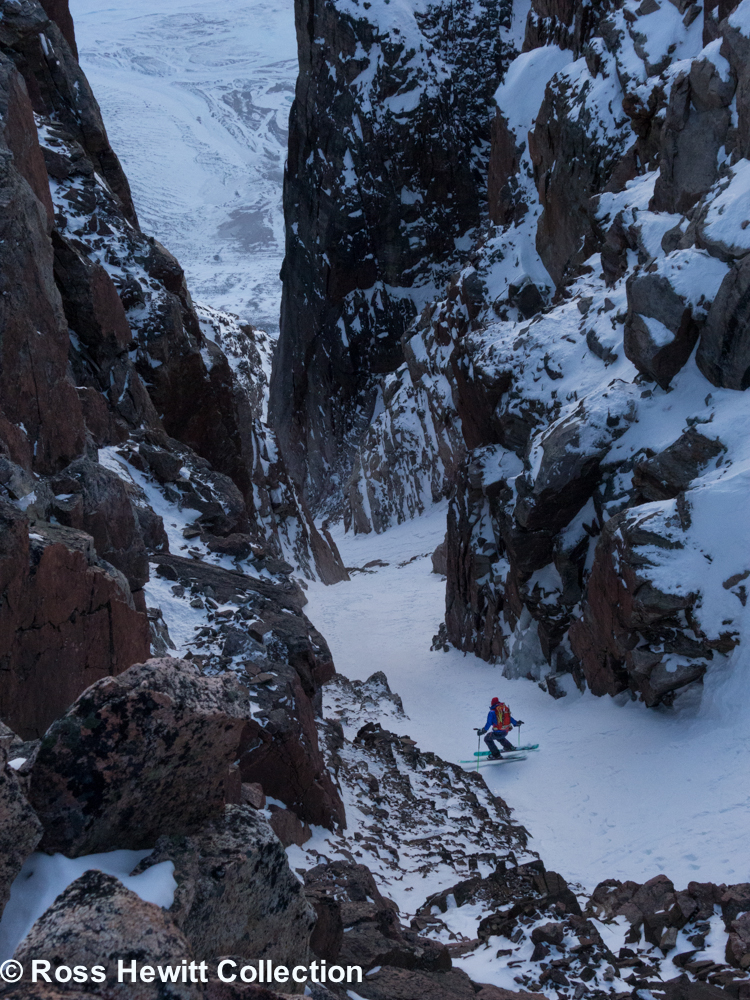
No Siesta

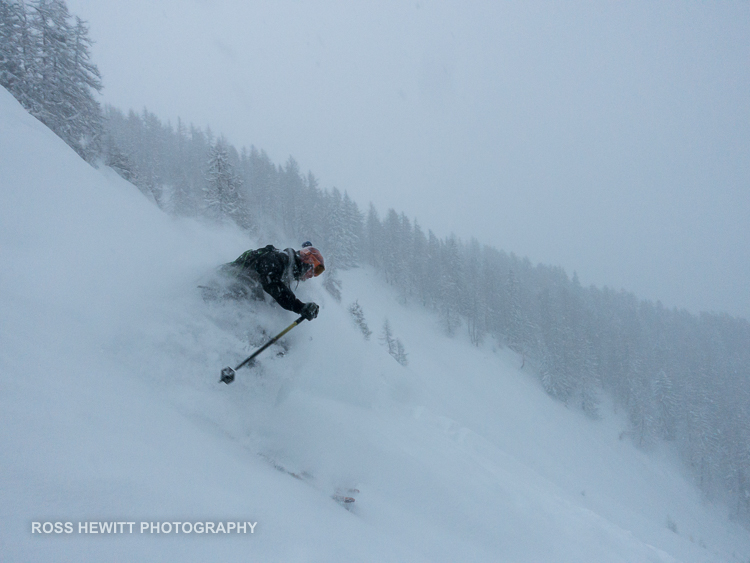
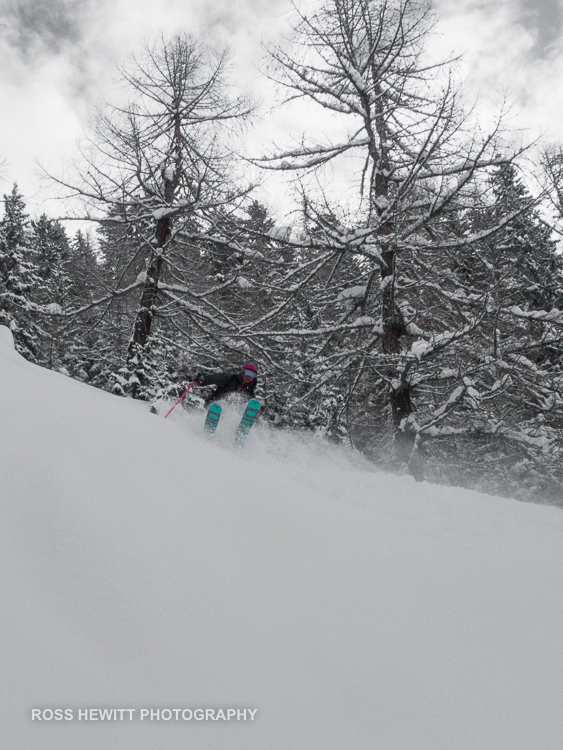
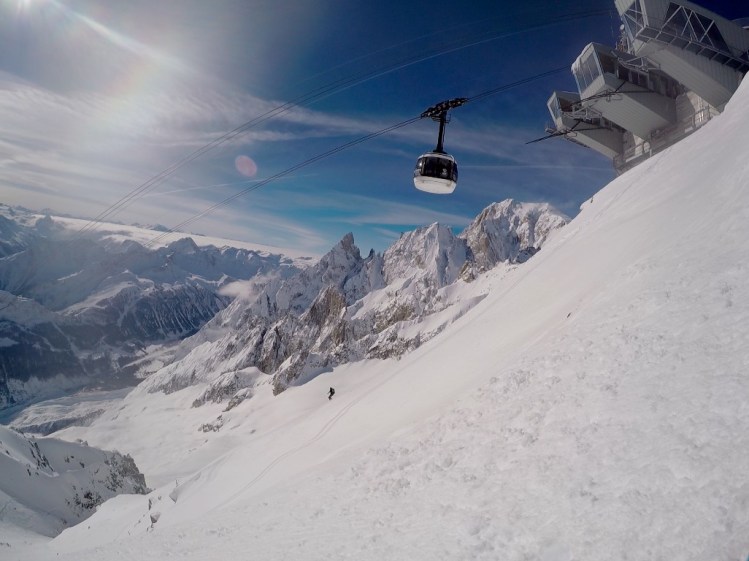
The week started with a full throttle powder day with Mikko, Jesper and Nikolina at Pavillion. After 8 laps there we moved across the road to Val Veni and did a few laps of the cable face. It was riding pretty sweet and I was psyched to get to ride this face again this season. For once the Scandos wanted to stop before it got dark and go eat pizza which was good too. From the comfort of my sofa that night with throbbing legs I felt pretty sorry for Nikolina who was working until 2 am!

The next day was sunny and a chance to get high. I hit Helbronner with Mikko and Jesper and we found the most amazing stable powder on the mountain. By lunch we had skied the classic cables line, Tassoti, straight line 3 times and Chesso twice, in total 7 x 1000m laps. Although it was still cool we decided to go back to darker Cham side and have a run on the Rond but once we got through the tunnel the light was flat and we called it at that not wanting to spoil what had been the best cables day for me for a few years.  These days were fast, furious, and focused on skiing so no photos! The only downside was hitting a rock at full speed on the Toula glacier that had me tomahawking to a standstill. It felt like my knee would explode as the tail bit on each rotation but I luckily got away with only strained medial ligament. I did exactly the same thing before going to Baffin so knew I could manage it.

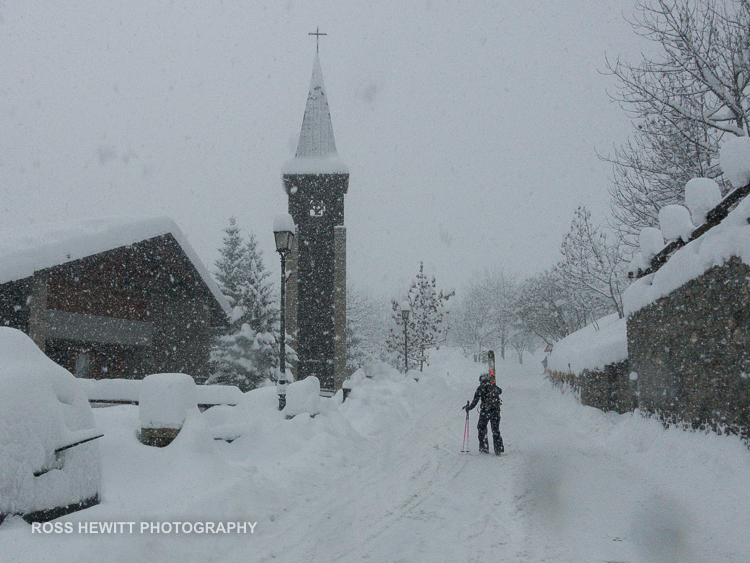
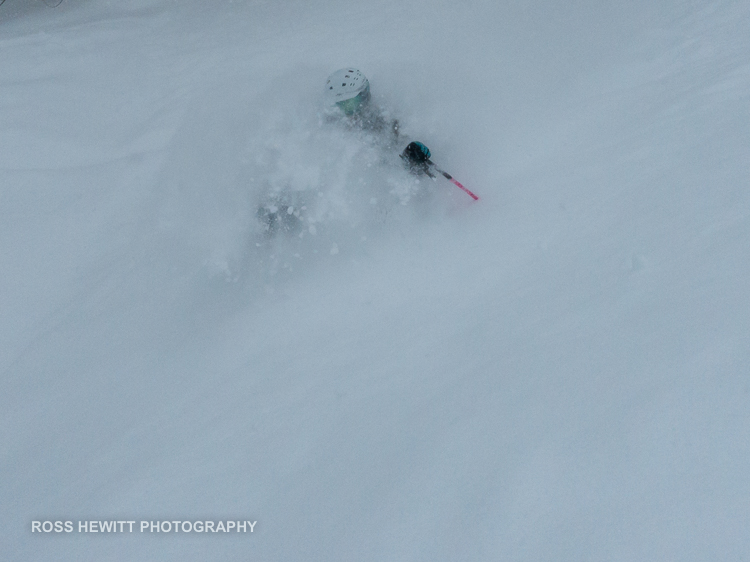
After resting my knee all the next morning I got the code red from De Masi that it was apocalyptic in Italy. We arrived over there to find it snowing at 20 cm an hour with 50 cm of fresh on the ground. With 115 underfoot it was still chest deep. There was a ridiculous amount of snow coming out of the sky and continuous face shots of cold champagne powder. Well, we skied until the liftie asked if we had homes to go to! I haven’t seen it snow that intensity since ’99 when we got a few metres in 3 days and the avalanches were blasting through the towns in the Alps, something no one wants to see a repeat of. Only a half day but 5 laps in the bag.

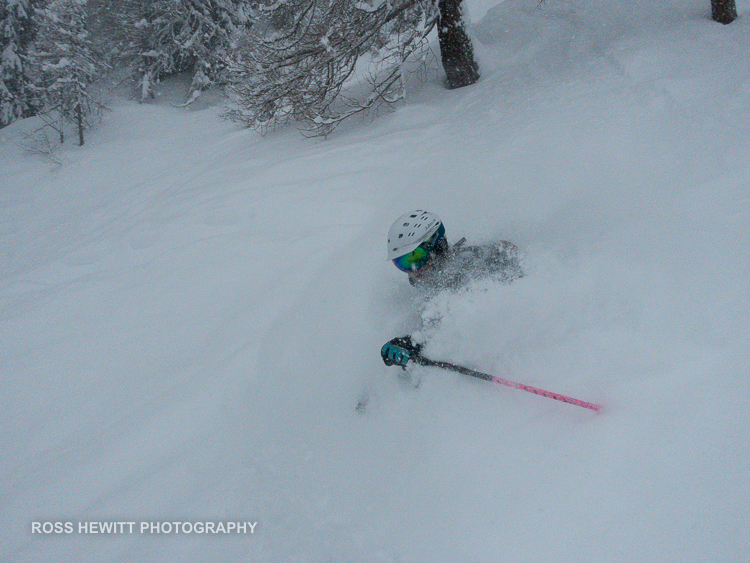
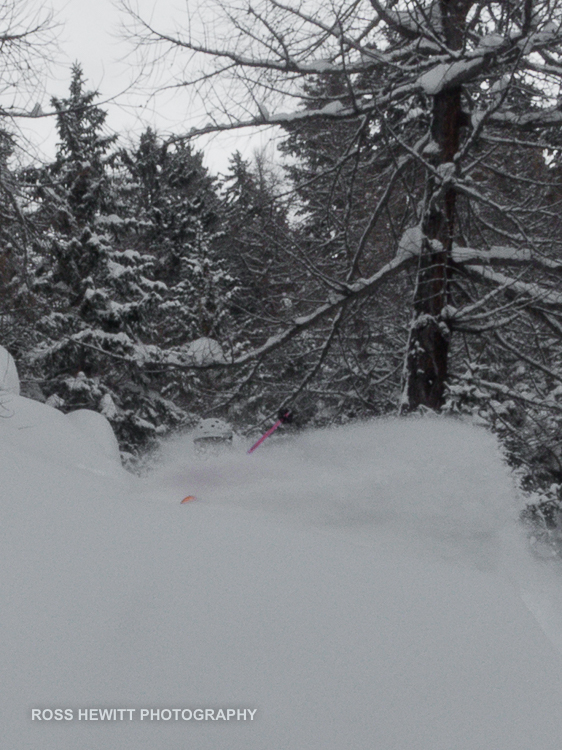
Pavillion freeride was the order of the day for Saturday and Michelle met up with her friend Ian from UEFA who was psyched for sport with the Cham lifts shut with the Foehn storm. During the morning it continued to snow and cover the tracks then the sun made an appearance giving us the visibility to jump on the spines and have a laugh. The main problem was avoiding white rooming yourself while launching over the pillows and fish mouths on the aprons. It was supposed to be an active rest day but in the end 7 laps dont really qualify as active rest! By now the Border control cops at the Mont Blanc tunnel were only stopping the car to ask where the good skiing was.

Eat, sleep, repeat. Too good to stop. U guessed it we were at Pavillion on Sunday, joined by Black Crows team mate Minna. We had fun there there until the sun came out at which point we decided to put some distance between ourselves and those big faces above  that were loaded with powder after days of storm. Switching to Val Veni, the trees were still providing awesome skiing, so much so that we had to have one last run and went to the Church spine face. The approach through the trees was incredible with 3 deep foot sluff runnels between the spines in the steep terrain of the forest – WTF? Then we popped out on the spine face and wait a minute, whats this heavy wet mank? Not cool. I’m guessing there was enough reflected infra red radiation off the Helbronner side onto our north facing slope to warm the snow. Time to go home. 6 laps.

Monday dawned fine. Can’t stop, won’t stop. Oli Herren said ‘yeah skiing, its a lifelong addiction.’ I wanted more, and the more I got, the more I wanted. Helbronner uppers. Michelle, Minna and myself ride the bin with Capozzi, Rolli, Civra Dano,Wallace, Hachemi, Husted. The cable face looked loaded and wind effected so we started the day on the more sheltered lines. The lower approaches into Pavillion were skiing amazingly but my legs were  tired. 4 laps and coffee. 40 laps over 6 days.

The weather for Tuesday was perfect…time to go touring use different leg muscles!

DSC03680

DSC03684DSC03735DSC03738DSC03783DSC03786DSC03794-2DSC03794DSC03842DSC03819DSC03829

DSC03902DSC03965DSC03979DSC04010DSC04026DSC04029DSC04039DSC04040DSC04052DSC04055DSC04105

FullSizeRender

FullSizeRender-1DSC04119DSC04184DSC04185DSC04196

Lenz Heat Sock Review

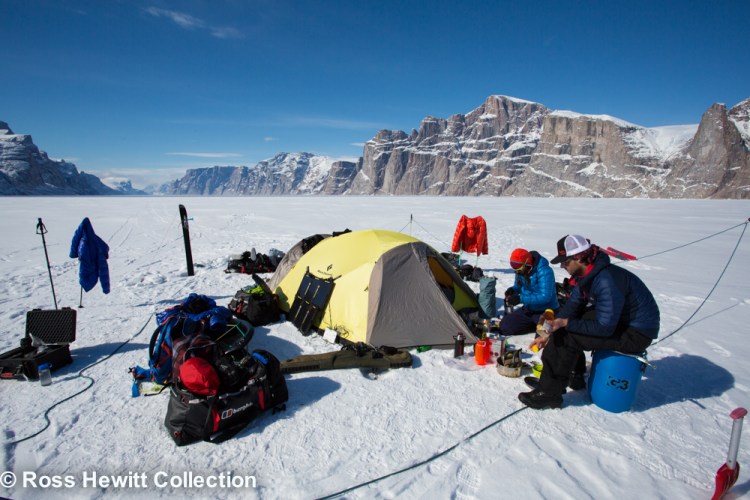
During the 2016 winter I was preparing for a spring ski mountaineering expedition to the north east fiords of Baffin Island. Situated deep within the Canadian Arctic, this area has granite walls that soar up to 1500 m out of the frozen fiords. Where there are diagonal weaknesses between the walls is where you find the couloir skiing. The team will be dropped into the fiords by snow machine and from that point onwards we will operate on our own for 3 weeks; skiing, eating and sleeping from a tent on the ice. With temperatures there regularly in the -20C range and dipping as low as -40C, its important to test all equipment thoroughly beforehand. I had been to this area before and found that the sea ice acts like a heat sink sucking the heat out of your feet and legs, which became a constant worry to stop my toes freezing. The nearest helicopter is 3000 miles away in Halifax so rescue is not straightforward or fast. For this trip I chose the Lenz Heat Sock 1.0 combined with the most powerful battery option (RCB1800) to help keep my feet warm, using solar charging systems to recharge the battery at night.

When I received the socks I wanted to test them with my ski touring boots and get used to operating them. The product is well made with the high quality you would expect. Out of the box the batteries were partially charged and only took a few hours to fully charge.

Baffin Berghaus Black Crows Ski Mounatineering Expedition-33

Marcus Waring and Michelle Blaydon in Gibbs Fiord, Baffin

Baffin Berghaus Black Crows Ski Mounatineering Expedition-46

Michelle Blaydon in Crosshairs Couloir, Baffin Island


Before Christmas there was only 50 cm snow in the Alps, just enough to get around on the glaciers in the high mountain. With low avalanche risk we were ski touring a lot and managed a trip to the beautiful old Couvercle refuge in the Talefre Basin. This coincided with the full moon so the night skies were due to be spectacular.

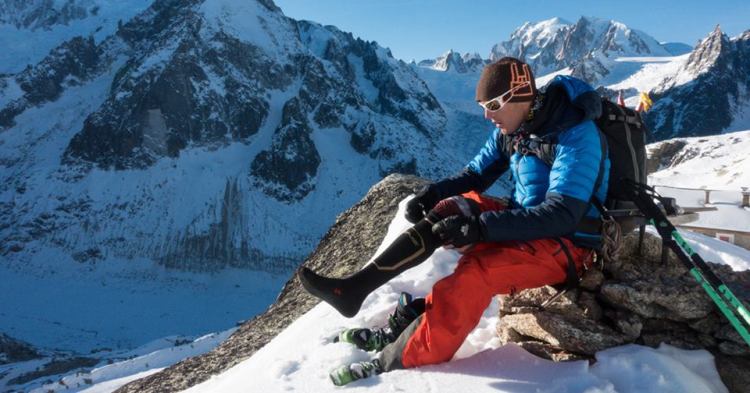
It usually takes 3 hours to go from Aiguille du Midi to the Couvercle refuge but the lack of snow and the need to rope through the Salle a Manger on the Mer de Glace meant slow progress and in the end it took 6 hours. I was happy the sock felt the same as other merino socks and didn’t cause any problems such as heal rub. The heating element runs under the foot and although you initially feel it when you put the socks on, you soon get used to it and completely forget its there. The socks have 3 heat levels and I set them on the lowest during the tour and then went to level 2 later in the hut when the outside temperature dropped. The battery clips in place to stud fasteners on the top of the sock. The sock cuff then wraps over the top of the battery. Its worth taking the time to ensure the sock cuff is fully wrapped down over the battery as I found in the lift queue its quite easy for people to graze the outside of your leg and knock the battery. Once you are aware of this it’s easy to avoid. In comparison, other ski boot heaters I have used with batteries at the rear of the boot tend to get damaged/knocked off on chairlifts so it’s a better system.


DSC01996-2

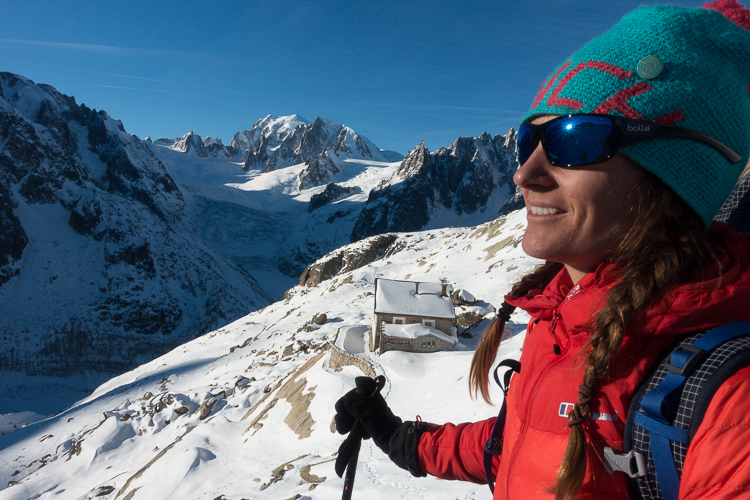
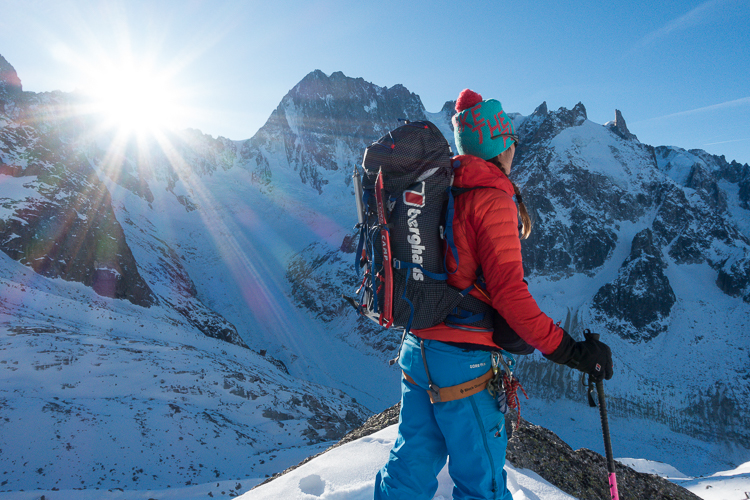
Michelle Blaydon on the Leschaux Glacier with the Chamonix Aiguilles behind


DSC02005-2

Full moon over the Vallee Blanche


12631325_727116977392082_1595384911660522990_n

Ross Hewitt on the ‘roof’ of the Couvercle getting ready to ski down.


The next test planned was more onerous with an alpine climbing trip to the classic 700 m, TD- Fil a Plomb ice route (700 m, TD-) on the north side of the Rognan du Plan near Aiguille du Midi. I teamed up with Andy Houseman for this and as always, in the shady north faces, its pretty cold in the short December days. With the benefit of heated socks I chose my lighter, less insulated Scarpa Phantom boots to enable me to climb quicker. The test here was those periods standing belaying where you usually get cold feet pretty quickly. I set the battery to level 2 and was really pleased to find my feet stayed comfortable throughout the day. Without the heat socks this was definitely a day I would have used more insulated bigger boots which are less fun to climb in. We reached the cable car around 3 pm and after 7 hours on setting 2 my batteries were starting to fade but they had done the job brilliantly.

DSC02042

A thin, fragile initial pitch

DSC02053

Crux pitch of Fil a Plomb


Since then I have used the socks for the 3 days ski technique course that forms part of the training on the British Mountain Guides scheme. Training days tend to have some time discussing topics when you can get cold and I was pleased to keep my feet warm with the Lenz socks.

These tests have confirmed the socks are brilliant in ski touring and climbing boots and the element under the foot does not affect performance and is not felt after a few minutes.

Note : If you have world cup fitted race boots then the sock may be too thick to fit in the boot and you should check the fit with the boot.

Roll on 2 years. I am still using the same battery packs but changed socks in spring 2016 to the Lenz Heat Sock 5.0. This sock has the element running over the top of the foot and wrapping over the toes so there is nothing under the foot which can be noticeable in boots. Two seasons of hard use and I can confirm the sock is hard wearing and the system sufficiently robust for all the abuse I throw at it.

Whether I’m guiding at a more relaxed pace or having a big day on the Midi where you put your skis on in the tunnel and ski flat out to town, the heat socks are the only thing that stop my feet freezing as they plough through -30C snow and all the blood gets directed to my quads!

So to recap, the heat sock 5.0 works best in ski boots due to the element position and combine this with the RCB1200 or RCB1800 batteries depending on how long your days will be.  For alpinists definitely go for the RCB1800 which I use, for skiers doing half days then consider the RCB1200.


Cosmiques Arete

A perfect cloudless winter day for Michelle to practice her mountaineering skills and for me to practice some short roping on her! No matter how many times you do this route its still loads of fun in a beautiful setting. Thanks Michelle!

DSC02056DSC02060DSC02064

Navis Freebird Review

New Zealand skiing Ross Hewitt Tom Grant-1-2

The Navis has been in the Black Crows line up since the early days and became a cult ski amongst the Chamonix steep skiers. In 2015 Black Crows introduced the lightened Freebird range for the back country.

Initially I was suspicious that the ride quality and dampening was going to be compromised by the lightened poplar / carbon / glass fibre core and I was slow to get out on them – how wrong could I be!  I mounted mine with PLUM guides for the 2015 winter and was really surprised by how dampened the ski is. It skis similarly to the classic 2012 Volkl Mantra but without the weight of the metal sheets.  My skis are the 179.4 / 133-102-118 / 19.

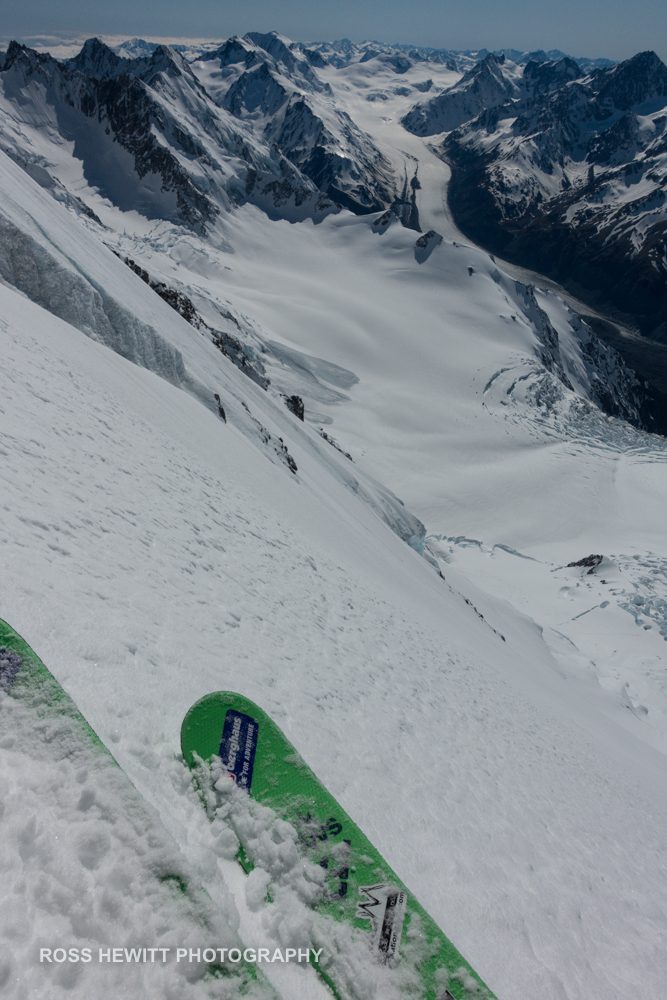
After the European winter I took my Navis Freebird to ski mountaineer in New Zealand where big walks carrying kit are the order of the day. They make the perfect compromise of weight, float with 102 under foot and edge holding.

Since then I have remounted them with a PLUM 170 race binding and the set up weighs 4120 g. The 2016 version has been lightened by 400 g so with any type of low tech binding it would give you a 4 kg set up. These are still my go to ski and the 102 under foot makes them much better for edging on firm or spring snow.

Navis freebird evaluation